
By Josh Tagg, mortgage broker · Mortgages for Less with INDI Mortgage · Calgary, serving all of Alberta ·
One of the biggest surprises for buyers isn’t the mortgage payment — it’s how many different times money leaves your account before you get the keys.
Most people plan for the down payment, but buying a home actually happens in stages. Different expenses come up at different times, and if you’re not prepared for the timing, it can feel stressful even when you can afford the home.
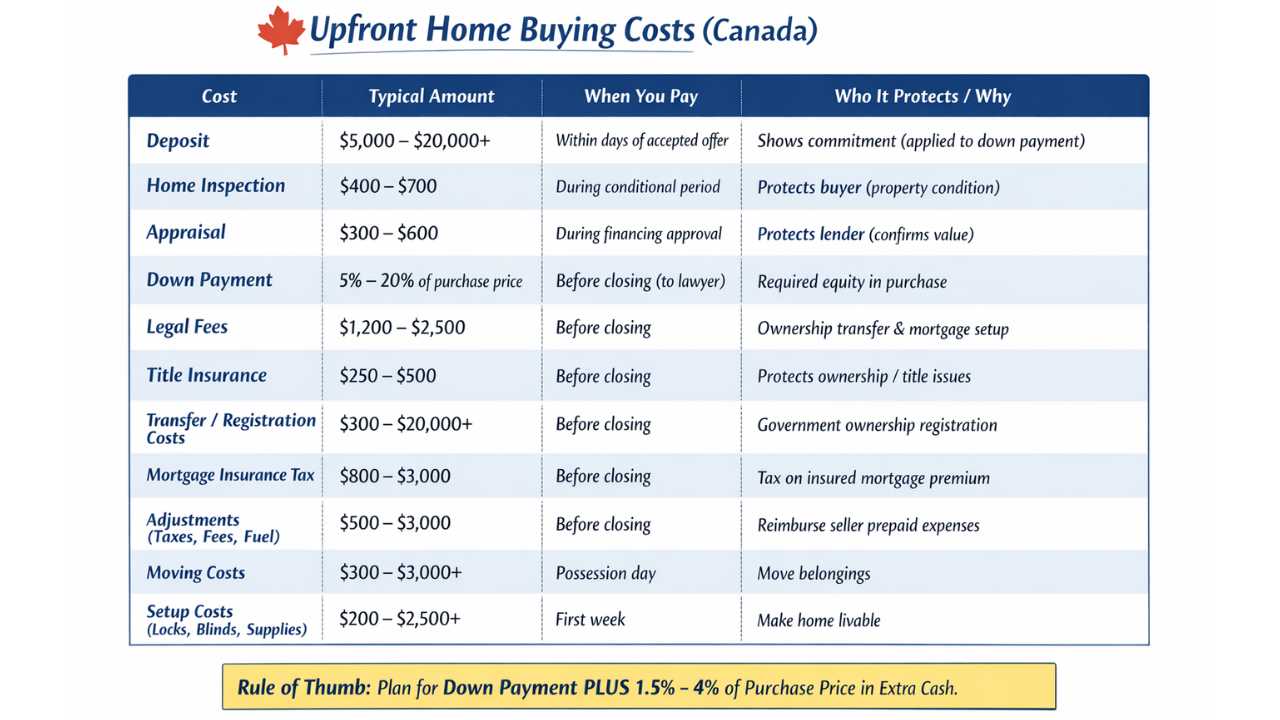
Here’s what the real payment timeline looks like. (Scroll to the bottom to see the chart.)
Step 1: What do you pay right after your offer is accepted?
Within a few days of acceptance, you’ll need to provide a deposit to the realtor.
This is typically between $5,000 and $20,000+, depending on the price of the property and market conditions. The deposit is held in trust by the real estate brokerage.
The important part: this is not an extra cost. It becomes part of your down payment on closing. But you do need to have this cash ready immediately, and many buyers forget to plan for that.
Step 2: What do you pay during the conditional period?

While the purchase is still conditional, you’ll complete your due diligence on the property and financing.
This is when you usually pay for a home inspection. Most inspections cost between $400 and $700 and are paid directly to the inspector.
Sometimes the lender will also require an appraisal, especially if you have a smaller down payment or the property is unusual. Appraisals typically cost $300 to $600.
These are upfront expenses and are separate from your closing costs.
Step 3: What is the big payment a few days before possession?
A few days before possession, your lawyer will send you a statement of adjustments showing exactly how much money you must provide. This is usually paid by bank draft or wire transfer. This single payment actually includes several different costs combined together.
First is the remainder of your down payment after the deposit is credited.
Next are the closing costs. These include legal fees, title insurance, and land transfer or registration charges.
- Legal fees are commonly $1,200 to $2,500
- Title insurance is typically $250 to $500
- Transfer or registration costs vary by location and price but often range from a few hundred dollars to several thousand.
If your down payment is under 20%, your mortgage insurance premium is added to your mortgage, but the tax on that insurance must be paid in cash at closing. This usually ranges from about $800 to $3,000.
You may also reimburse the seller for prepaid expenses such as property taxes, condo fees, or heating fuel. These adjustments commonly add another $500 to $3,000 depending on the time of year.
In total, most buyers should plan to have about 1.5% to 4% of the purchase price available in addition to their down payment.
Step 4: What do you pay on possession day and the first week?

Once you receive the keys, there are still a few unavoidable expenses.
Moving costs vary widely but often run from about $300 to $3,000+ depending on whether you hire movers.
Then come the small setup costs that nearly everyone forgets. Rekeying locks, window coverings, cleaning supplies, basic tools, and internet setup typically add another $200 to $2,500+. Some homes also need appliances right away, which can add several thousand more.
These aren’t mortgage costs, but they are very real upfront expenses.
What’s the simplest way to plan for upfront home buying costs?
Buying a home doesn’t require one payment — it requires four waves of payments:
Deposit after acceptance
Inspection and appraisal during conditions
Closing funds to the lawyer
Move-in expenses after possession
If you understand the timing ahead of time, the process feels much smoother and far less stressful.
If you want, I can help you calculate your exact cash requirement before you start shopping so you know your comfortable price range with confidence.
How an Alberta mortgage broker helps you plan your upfront costs
Knowing the timing is half the battle. Here’s how we help you have the cash ready at each stage:
- We work out your exact cash requirement — down payment plus closing costs — before you start shopping.
- We flag when a lender is likely to require an appraisal so it isn’t a surprise during conditions.
- We confirm which costs apply in Alberta (title and mortgage registration, not land transfer tax).
- We set your comfortable price range so the deposit, closing funds and move-in costs all fit.
- We work with buyers across Calgary, Edmonton and all of Alberta.
Know your real cash requirement before you shop
Let’s calculate your down payment, closing costs and a price range you’re comfortable with — before you write an offer.
Apply Online → Book a Discovery Call → Serving Calgary, Edmonton & all of Alberta · Mortgages for Less with INDI MortgageUpfront costs of buying a home: common questions
How much cash do I need to buy a home besides the down payment?
How much is the deposit when my offer is accepted?
Is the deposit an extra cost on top of my down payment?
How much does a home inspection and appraisal cost?
What’s included in the payment to my lawyer before possession?
Do Alberta buyers pay land transfer tax or tax on mortgage insurance?
What costs come up after I get the keys?
This article is general information for Alberta homebuyers, not financial, mortgage, tax or legal advice. Cost ranges are typical estimates and vary by property, price, location, lender and service provider; your lawyer’s statement of adjustments shows your exact closing figures. Any mortgage is subject to lender approval. Please speak with a licensed mortgage professional about your specific situation. Mortgages for Less with INDI Mortgage.