The Bank of Canada held its policy rate at 2.25% on July 15. Its message was reassuring: inflation should gradually return toward 2%, housing appears to be stabilizing, and the current interest rate remains appropriate.
That sounds like stability. For many Edmonton households, however, groceries, gasoline and mortgage payments tell a different story.
Why Are You Hearing Two Different Inflation Numbers?
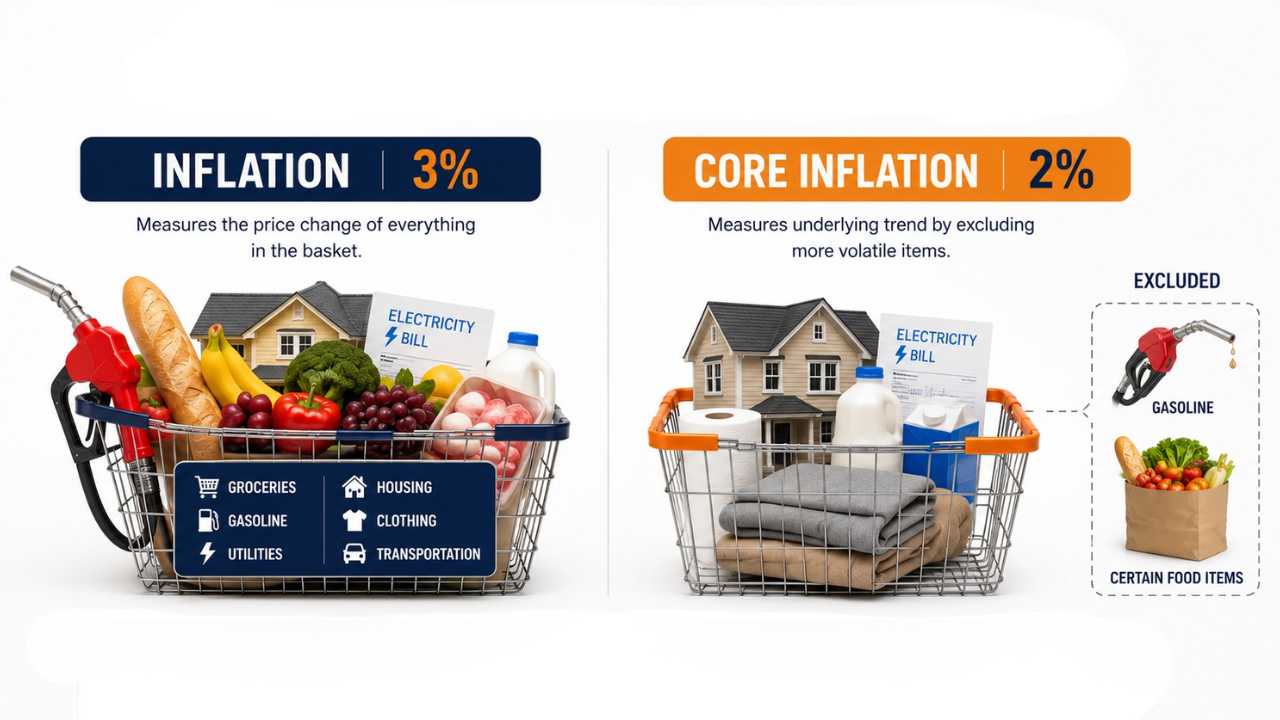
Headline inflation was 3.2% in May. This measures price changes across the full Consumer Price Index basket, including gasoline and food.
Core inflation was closer to 2%. Core measures are designed to show the underlying trend by reducing the influence of unusually volatile items. Gasoline prices rose sharply because of the conflict in the Middle East, and inflation excluding gasoline was approximately 2.2%.
Core inflation is not misleading, but it is not a household budget. You cannot remove gasoline from your expenses simply because its price is volatile.
Why Are the Biggest Expenses the Hardest to Avoid?
Shelter, transportation and food make up roughly 63% of the inflation basket. These are also the categories households have the least ability to eliminate.
You can postpone buying furniture or clothing, but you still need somewhere to live. You still need food, and many Edmonton residents rely on a vehicle for work, school and everyday errands.
This helps explain why the official inflation outlook can sound calmer than life feels. Price increases are concentrated in expenses that consume a large part of the average household budget.
Does Lower Inflation Mean Lower Prices?
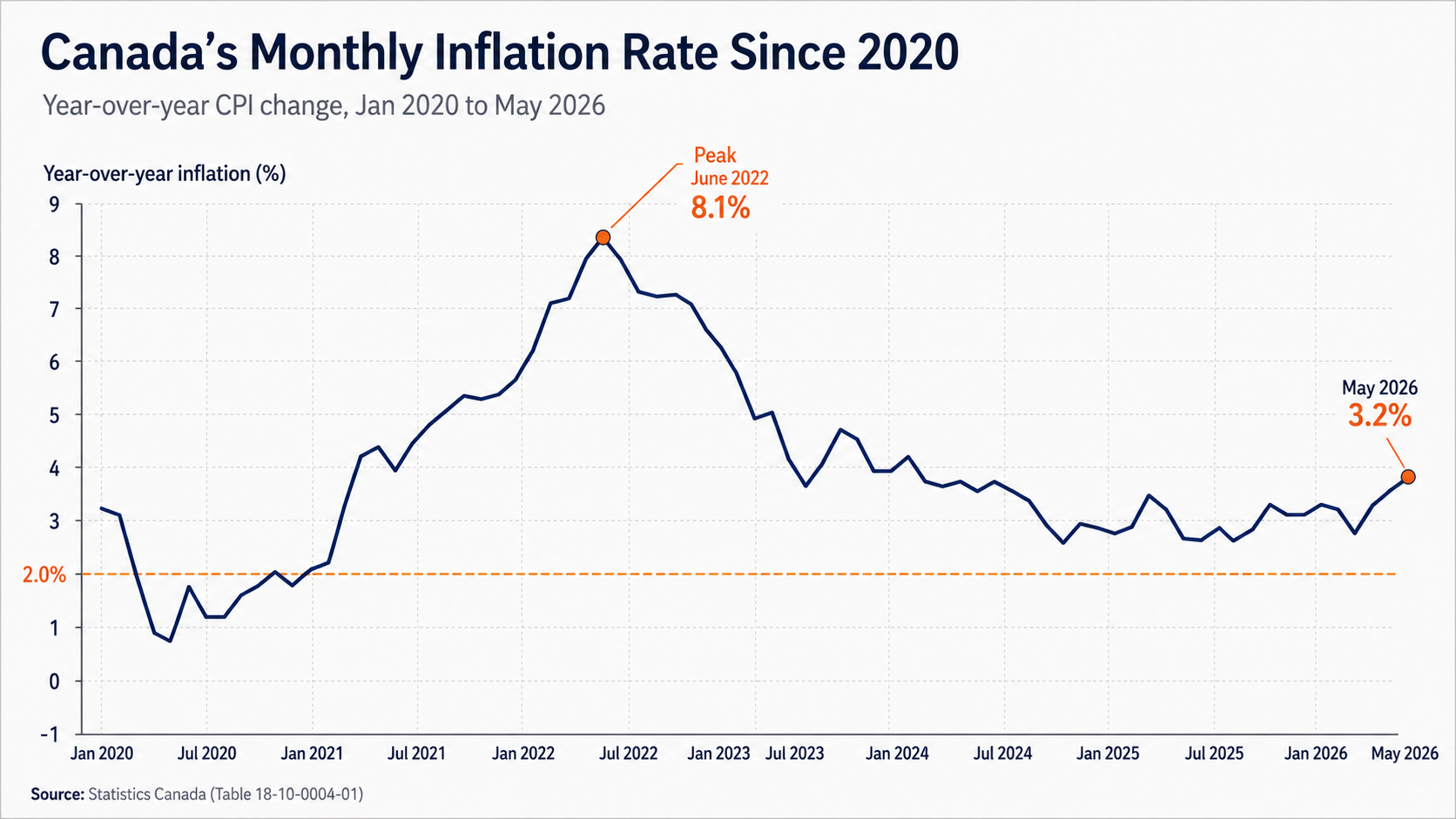
When inflation falls, prices do not normally return to where they were before. They simply rise more slowly.
Canada experienced very high inflation in 2021 and 2022, peaking at 8.1% in June 2022. Households are still paying prices that include much of that earlier increase.
Inflation moving closer to target is good news, but it does not immediately restore affordability. Families may still feel behind if wages have not kept pace with their particular expenses.
How Do Mortgage Renewals Add More Pressure?
Homeowners renewing in 2026 may be replacing a mortgage rate from five years ago with a much higher rate today.
A Bank of Canada hold does not mean your mortgage payment will remain unchanged. It only means the policy rate did not move at this announcement.
Before accepting a renewal offer, review the proposed rate, remaining balance, amortization, payment and mortgage features. Starting early gives you more time to compare lenders and prepare for the new payment.
Why Does Alberta Feel Both Sides of Higher Oil Prices?
Higher oil prices can support Alberta’s economy through investment, exports and employment. At the same time, Edmonton households pay more at the pump, and higher transportation costs can affect groceries and other goods.
Both realities can be true at once: stronger energy prices may support jobs while making everyday life more expensive.
How Should You Plan for Your Own Reality?

The message is not to panic. It is to plan according to your actual household finances rather than a national soundbite.
Review your housing, transportation, food and debt costs. Protect room in your budget, avoid using home equity to maintain an unaffordable lifestyle, and make home-buying decisions based on long-term affordability rather than emotion.
The economic story may be rosier than your household budget. Look beyond the headline and plan for the reality you are living.
If you’ve got questions or are looking for some free personalized advice, contact me.
How an Alberta mortgage broker helps when the headline and your budget disagree
Inflation data is national. A mortgage is personal. Here is where a broker actually moves the needle:
- We work from your own cost of living — housing, transportation, food and debt payments — not the average household in the CPI basket.
- We start the renewal review early, so there is time to compare lenders instead of signing the first offer that arrives in the mail.
- We check the whole renewal offer: rate, remaining balance, amortization, payment and mortgage features, not just the rate on the front page.
- We show you what the new payment actually looks like if you are replacing a five-year-old rate, so it is not a surprise on the maturity date.
- We talk you through using home equity — and when doing so would only fund an unaffordable lifestyle rather than fix anything.
- We frame the buy decision around long-term affordability instead of whichever rate headline ran that week.
Want the numbers for your household, not the country’s?
Whether you are renewing in 2026, buying in Edmonton, or just trying to figure out where your budget really stands, let’s go through it together.
Apply Online → Book a Discovery Call → Serving Calgary, Edmonton & all of Alberta · Mortgages for Less with INDI MortgageInflation, rates and Edmonton budgets: common questions
Why are there two different inflation numbers?
Is core inflation a better measure of what my household actually pays?
Which expenses drive the inflation people actually feel?
If inflation is falling, will prices come back down?
Does a Bank of Canada hold mean my mortgage payment will not change?
What should I review before accepting a renewal offer?
Do higher oil prices help or hurt Edmonton households?
This article is general information for Alberta homebuyers and homeowners, not financial, mortgage, tax or legal advice. Interest rates, Bank of Canada decisions, inflation data and lender pricing change over time, and every mortgage is subject to lender approval. Please speak with a licensed mortgage professional about your specific circumstances. Mortgages for Less with INDI Mortgage.