
Buying a home in Alberta often starts with one big question: how do you actually save the down payment?
I speak with many buyers who are financially responsible, have steady income, and are ready to buy a home, but they feel stuck at the down payment stage. The good news is that there are some very practical strategies Canadians can use to build that savings faster than they might think.
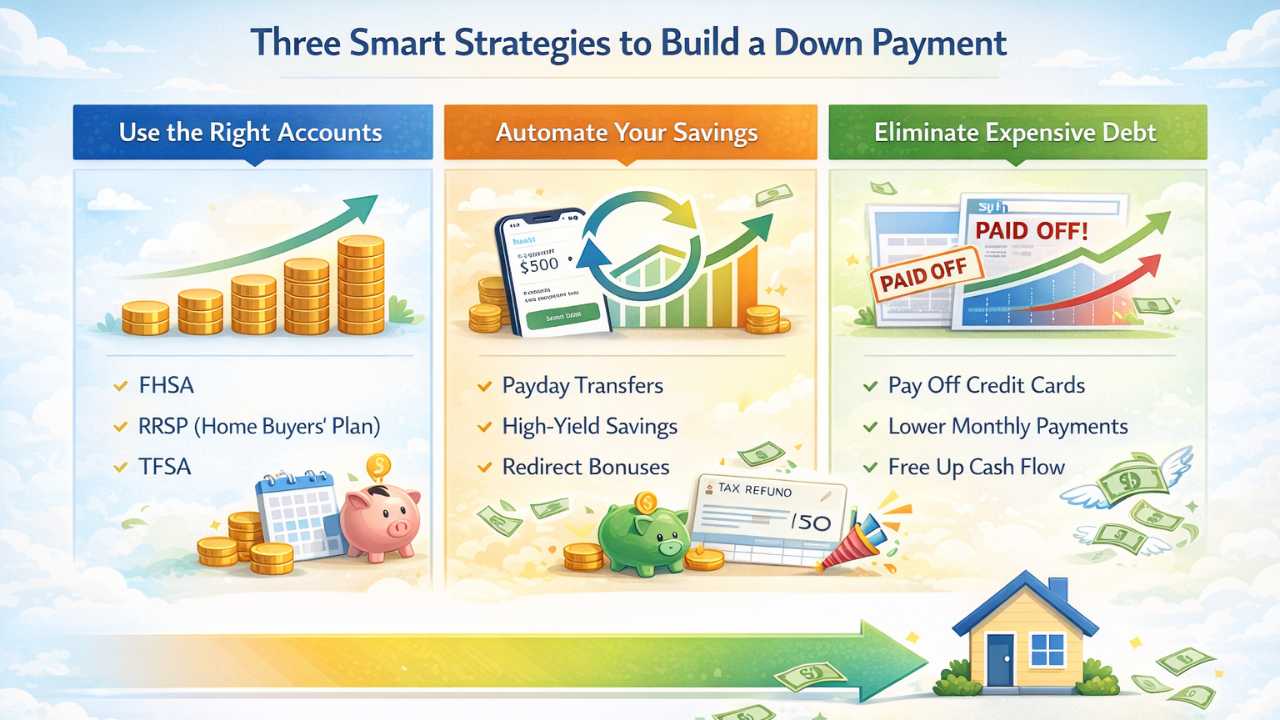
In my experience working with Alberta homebuyers, the most effective approach usually comes down to three key strategies:
- using the right tax-advantaged accounts
- automating your savings
- reducing high-interest debt so you can redirect that money toward your future home.
How do Canada’s tax-advantaged accounts speed up a down payment?
Canada offers several powerful programs specifically designed to help people save for a home. When used properly, these accounts can significantly accelerate your down payment savings.
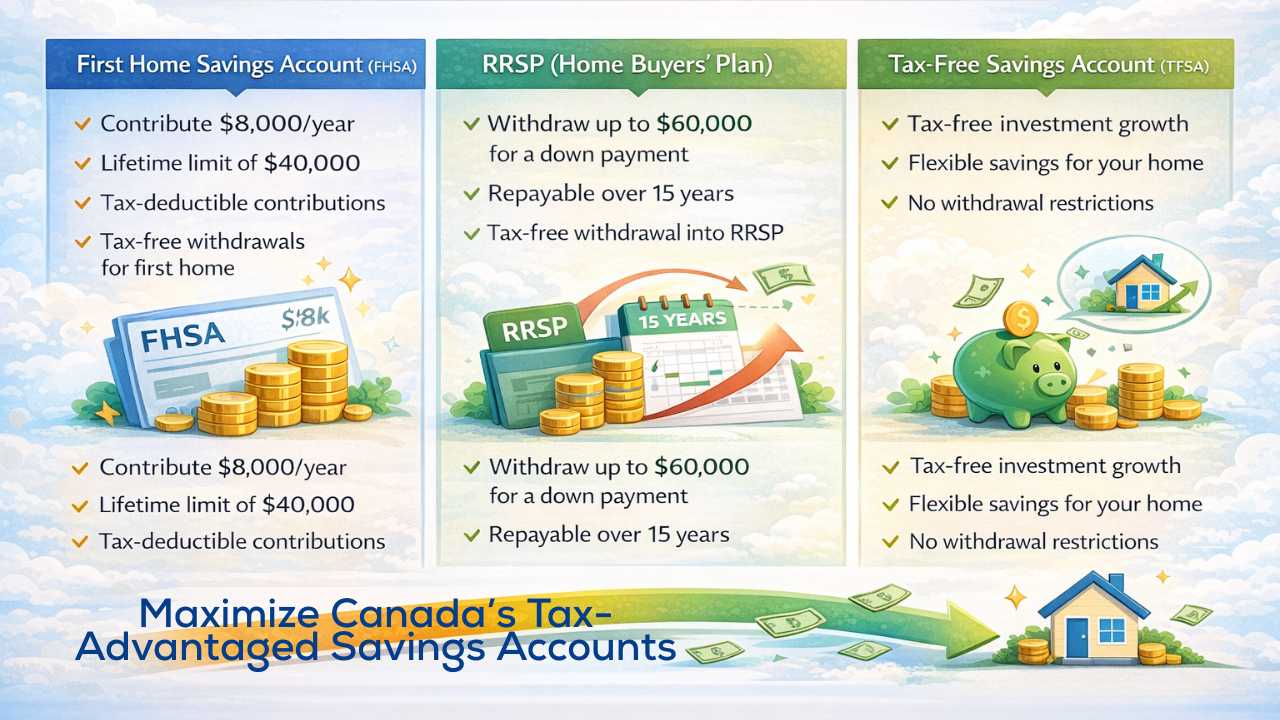
One of the best tools available today is the First Home Savings Account, or FHSA. This program allows Canadians to contribute up to $8,000 per year, with a lifetime limit of $40,000. The big advantage is that contributions are tax-deductible, which means you may receive a tax refund when you contribute. Even better, when you withdraw the money to purchase your first home, those withdrawals are tax-free.
Another important program is the Home Buyers’ Plan. This allows first-time buyers to withdraw up to $60,000 from their RRSP to use toward a down payment. The withdrawal is tax-free as long as the funds are repaid back into the RRSP over a 15-year period. For many buyers, this can be a significant boost when they are close to purchasing.
Your Tax-Free Savings Account, or TFSA, can also play a role. Any investment growth inside a TFSA is not taxed, which makes it a flexible place to build savings for a future home purchase.
Many buyers use a combination of these accounts to build their down payment more efficiently.
How do you automate your savings so it actually happens?
One of the most effective habits I recommend to clients is simple: automate your savings.
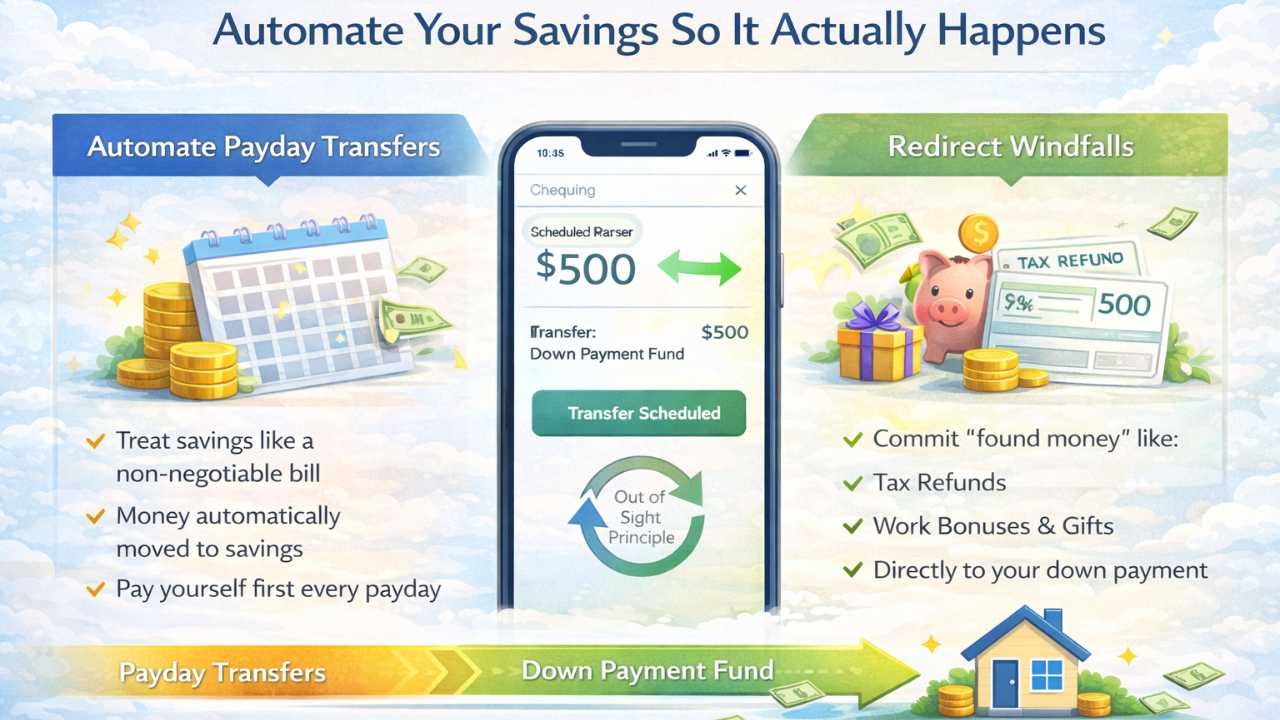
When you set up automatic transfers from your chequing account into a dedicated savings or investment account every payday, you remove the temptation to spend that money. It becomes similar to paying a bill. The savings happen first, and you live on what remains. This is called the “out of sight” principle. If the money never sits in your everyday spending account, it becomes much easier to stay consistent.
Another powerful tactic is redirecting windfalls. Many people receive occasional extra money during the year such as tax refunds, work bonuses, or gifts. Instead of letting that money disappear into everyday spending, committing those funds directly to your down payment can make a surprisingly large difference. A few tax refunds or bonuses over a couple of years can move your timeline forward significantly.
How does paying off high-interest debt help you save?
The third strategy is often the one that creates the biggest impact.
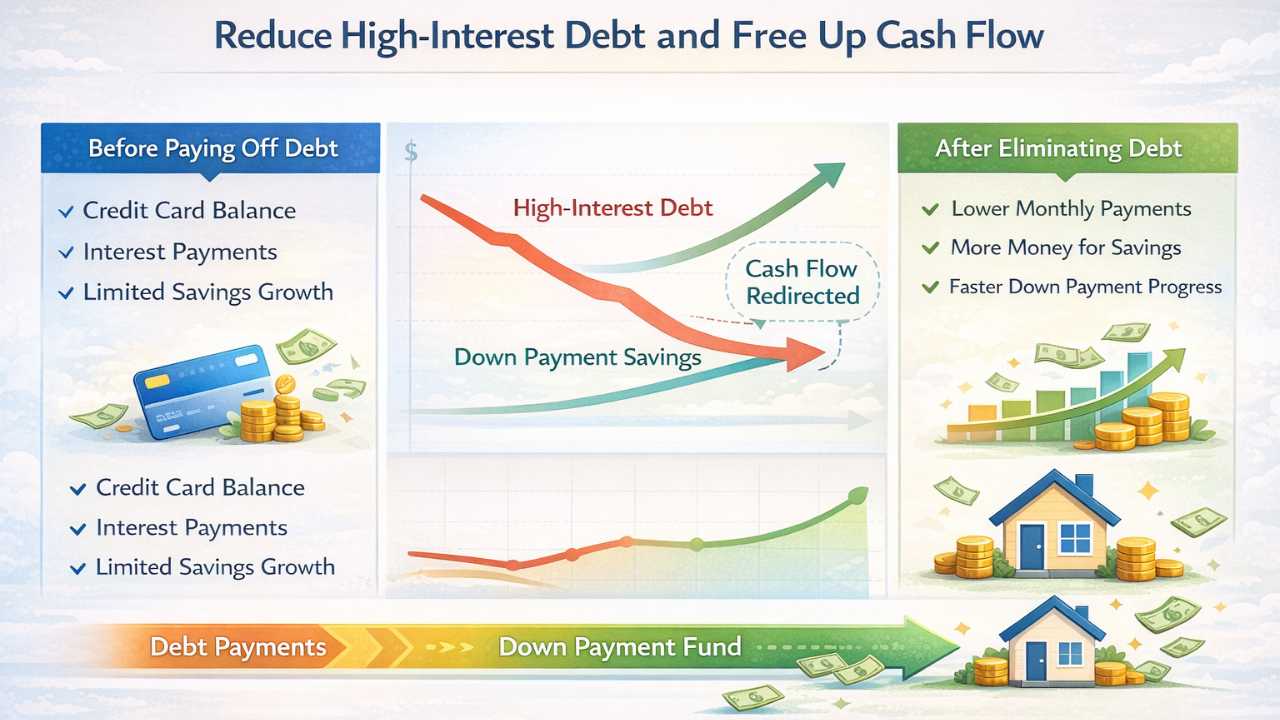
High-interest debt, especially credit cards, quietly drains your ability to save. When you eliminate that debt, the money that used to go toward interest payments can immediately be redirected into your down payment fund. Reducing debt also improves your mortgage eligibility. Lenders look closely at your monthly debt obligations when determining how much you can borrow. Lower debt can mean qualifying for a larger mortgage or better financing options.
Another useful exercise is what I call a lifestyle audit. Take a close look at your monthly spending and identify areas where you could temporarily reduce expenses. Dining out less often, cancelling unused subscriptions, or delaying large purchases for a year or two can free up thousands of dollars.
Some buyers also choose to boost their income temporarily with freelance work or side projects specifically to fund their down payment. When that additional income goes straight into savings, it can accelerate your progress considerably.
Which strategy matters most?
Saving for a down payment can feel overwhelming at first, but when you break it down into clear steps, it becomes much more manageable. Using the FHSA and other tax-advantaged accounts, automating your savings, and reducing high-interest debt can dramatically shorten the timeline for many Alberta buyers.
If you’re thinking about buying a home in Alberta and want to understand how close you really are, that’s a conversation I have with clients every day. Contact me to talk it out. Sometimes the gap between where you are today and owning a home is smaller than you think.
How an Alberta mortgage broker helps with your down payment
Most buyers don’t need a bigger down payment so much as a clearer target. Here’s what we work through:
- We calculate the actual down payment you need for the price range you’re shopping in — it’s often less than people assume.
- We show how paying down a credit card or loan changes what you qualify for, so you can see which debt to attack first.
- We map out which accounts to draw from — the FHSA, the Home Buyers’ Plan, a TFSA — and the timing rules that come with each.
- We go through what lenders will want to see as proof the money is yours, including gifted funds.
- We put a realistic timeline on it, so you know whether you’re months or years from being ready.
- We help buyers across Calgary, Edmonton and all of Alberta.
Find out how close you actually are
A short conversation will tell you the down payment you really need — and how much of it you may already have.
Apply Online → Book a Discovery Call → Serving Calgary, Edmonton & all of Alberta · Mortgages for Less with INDI MortgageSaving a down payment: common questions
How much can you contribute to an FHSA?
How much can you withdraw from an RRSP under the Home Buyers’ Plan?
Can you use a TFSA for a down payment?
What is the easiest way to save for a down payment consistently?
What should you do with a tax refund or work bonus?
Should you pay off debt or save for a down payment first?
What else can you do to save faster?
This article is general information for Alberta homebuyers, not financial, mortgage, tax or legal advice. It reflects program rules and market conditions as of March 2026; contribution limits, rates, prices and lender guidelines change. Any mortgage is subject to lender approval. Please speak with a licensed mortgage professional, and a tax professional about the account rules, before acting on your specific situation. Mortgages for Less with INDI Mortgage.