By Josh Tagg, mortgage broker · Mortgages for Less with INDI Mortgage · Calgary, serving all of Alberta ·
One of the first questions first-time buyers ask themselves is: “Should I keep renting, or should I buy a home?”
It’s a big decision, and it can feel overwhelming. There are a lot of opinions online. Friends and family may tell you different things. And the housing market in Alberta doesn’t always make the choice obvious.
The truth is that renting vs buying in Canada is not a one-size-fits-all decision. Both options have advantages, and both come with trade-offs. In this article, I’ll walk you through how renting works, how buying works, and the key pros and cons of each. My goal is to help you understand which option may make more sense for your situation.
What is renting?

Renting means paying a landlord each month to live in a property that you do not own.
This could be an apartment, condo, basement suite, or even a house. In Canada, most renters sign a lease agreement that sets the monthly rent and the length of time they will stay in the property.
When you rent:
- You pay monthly rent to the landlord
- The landlord owns the property
- The landlord is usually responsible for major repairs and maintenance
- You can move when your lease ends
Many people choose renting because it offers flexibility and lower upfront costs. You don’t need a large down payment. You usually only need a damage deposit and your first month’s rent. For people who expect to move cities, change jobs, or who are still figuring out where they want to live long term, renting can be a practical option.
What is buying?

Buying a home means purchasing a property and becoming the owner.
Most first-time buyers in Canada use a mortgage to do this. A mortgage is a loan used to buy a home. Instead of paying rent to a landlord, you make monthly mortgage payments to a lender.
When you buy a home:
- You make a down payment
- You take out a mortgage
- You make monthly payments that include principal and interest
- You are responsible for repairs and maintenance
The big difference is that part of each payment goes toward paying down your mortgage. Over time, this builds equity in your home. Many buyers choose to purchase a home because they want stability, long-term financial growth, and the ability to control their living space. For many Canadians, buying a home is also an important step toward building long-term wealth.
What are the pros and cons of renting vs buying?
Let’s look at the practical advantages and disadvantages of renting vs buying in Canada.
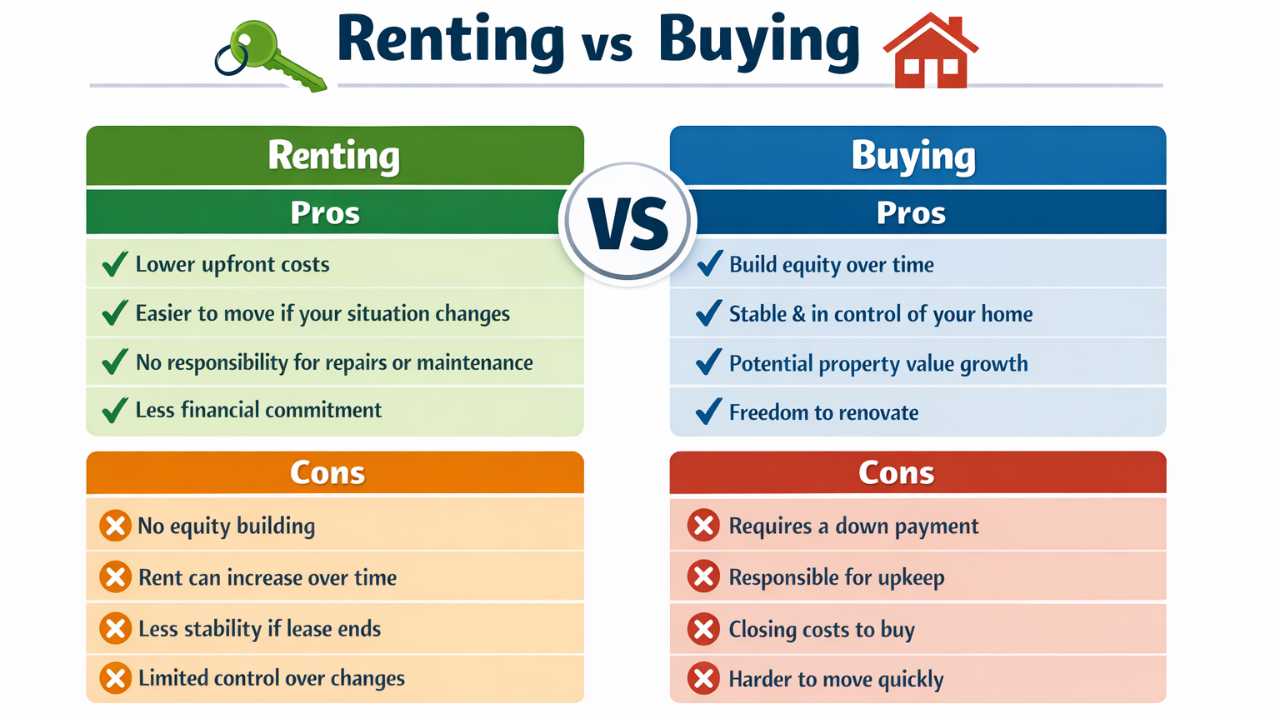
Neither option is automatically better. It depends on your goals, finances, and stage of life.
Which option is better for first-time buyers?
This is where things become more personal.
There are situations where renting makes more sense, and others where buying can be the better long-term move.
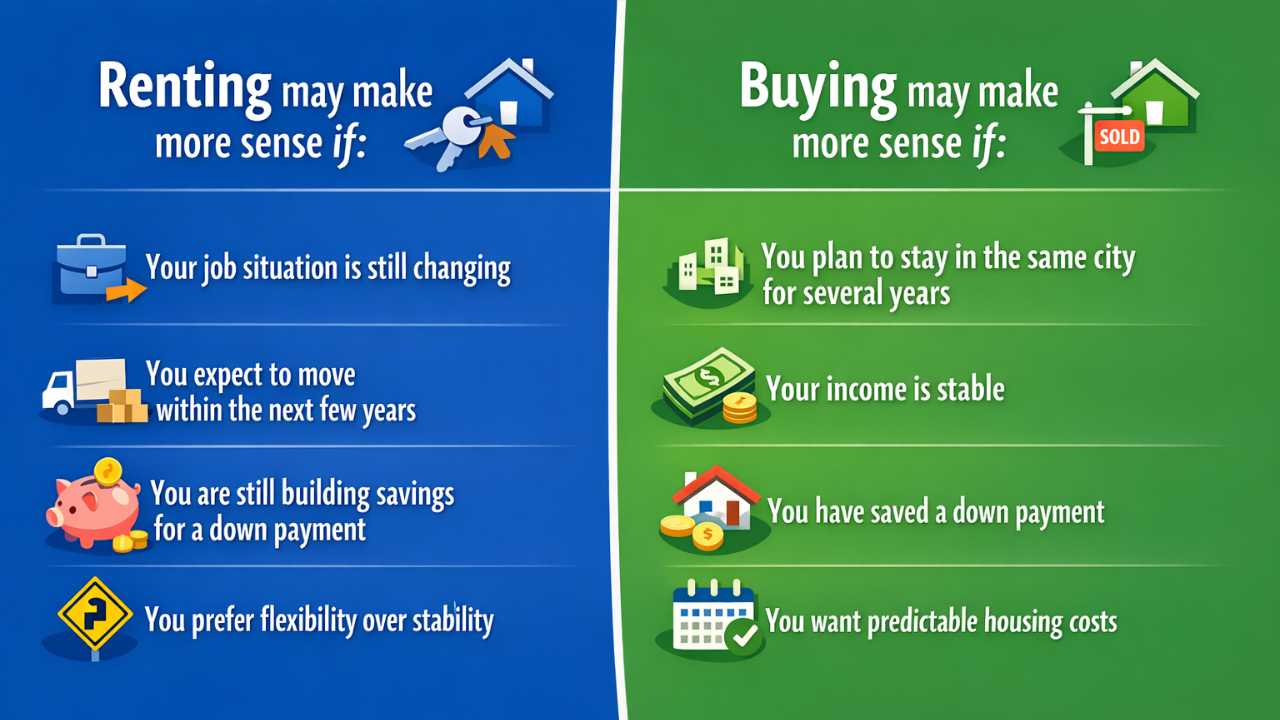
For many first-time buyers in Canada, the decision comes down to long-term stability versus short-term flexibility. A mortgage payment may sometimes be similar to rent. But the key difference is that a mortgage payment can help build equity over time. Still, buying only makes sense when the numbers work for your situation.
What mistake do many first-time buyers make?
A common mistake I see is assuming that renting is always “throwing money away.” That idea gets repeated a lot online, but it’s not always accurate. Renting provides something valuable: flexibility and lower financial risk. If someone buys a home before they are financially ready, they may feel pressure from repairs, property taxes, or unexpected costs.
Another mistake is assuming they cannot qualify for a mortgage when they actually can. Many first-time buyers underestimate what they can afford or believe they need a much larger down payment than required. This is where getting proper advice early can make a big difference.
How does a mortgage broker help you decide?

One of the most helpful things you can do before deciding between renting and buying is to understand what your mortgage options actually look like. As a mortgage broker, my role is to help buyers look at their real numbers. That includes:
- What price range they may qualify for
- What their monthly mortgage payment could be
- What down payment options are available
- How their credit and income affect their approval
Sometimes buyers discover that homeownership is closer than they expected. Other times, the best decision is to continue renting while building a stronger financial position. Either way, having clear information helps you make a more confident decision.
So should you rent or buy?
The debate around renting vs buying in Canada can make it sound like one option is always better. In reality, the right choice depends on your personal situation. Renting offers flexibility and lower upfront costs. Buying offers stability and the opportunity to build equity over time. Neither choice is automatically right or wrong. What matters most is understanding your options and choosing the path that fits your goals, finances, and timeline.
If you’re trying to decide between renting and buying, the best next step is understanding what your mortgage options actually look like. Get ahold of me today to find out!
How an Alberta mortgage broker helps you decide between renting and buying
The rent-or-buy question is really a numbers question wearing a lifestyle costume. Here’s what we work through together:
- We work out the price range you’d actually qualify for, so you’re comparing real options instead of guesses.
- We put a mortgage payment beside your current rent — with taxes, insurance and upkeep included, not just the principal and interest.
- We go through your down payment options, including the minimums, so you know whether the gap is two years away or two months.
- We look at how your credit and income affect approval, and what to fix first if buying isn’t the right move yet.
- We’ll tell you when continuing to rent is the better call — building a stronger position first is a legitimate answer.
- We help first-time buyers across Calgary, Edmonton and all of Alberta.
Want to know what you’d qualify for before you decide?
It takes one conversation to see whether buying is realistic this year — or whether renting a while longer is the smarter play.
Apply Online → Book a Discovery Call → Serving Calgary, Edmonton & all of Alberta · Mortgages for Less with INDI MortgageRenting vs buying: common questions
Is renting just throwing money away?
What does renting actually involve?
What does buying a home involve?
How much money do you need upfront to rent versus to buy?
When does renting make more sense than buying?
When does buying make more sense than renting?
How does a mortgage broker help you decide?
This article is general information for Alberta renters and homebuyers, not financial, mortgage, tax or legal advice. It reflects market conditions as of March 2026; rates, prices, rents and lender guidelines change. Any mortgage is subject to lender approval. Please speak with a licensed mortgage professional about your specific situation. Mortgages for Less with INDI Mortgage.