By Josh Tagg, mortgage broker · Mortgages for Less with INDI Mortgage · Calgary, serving all of Alberta ·
Canada is now officially in a technical recession after the economy contracted for two consecutive quarters.
Under normal circumstances, many people would expect the Bank of Canada to respond by cutting interest rates.
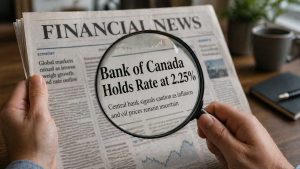
Instead, the Bank held its overnight rate steady at 2.25% on June 10 and signalled that it may remain on hold for quite some time. That has left many Alberta homeowners and buyers wondering what happens next.
Why is the Bank of Canada holding rates during a recession?

Normally, a weak economy makes the Bank of Canada more likely to lower rates. Lower rates encourage borrowing, spending, and investment, which can help stimulate economic growth. The challenge right now is that inflation has not completely disappeared.
While Canada’s economy has weakened, inflation remains near the upper end of the Bank’s target range, and higher energy prices are creating additional uncertainty. Oil prices have risen because of ongoing conflict in the Middle East, and that increase is flowing through to gasoline and transportation costs.
That puts the Bank of Canada in a difficult position. Cut rates too quickly and inflation could move higher again. Raise rates and they risk putting additional pressure on an already weak economy. For now, the Bank appears to be choosing a third option: wait.
Why don’t economists expect rate hikes either?
Even though inflation risks remain, many economists believe the Bank of Canada is unlikely to raise rates anytime soon. The main reason is that the underlying economy simply isn’t showing signs of overheating. Economic growth has been weak, consumer spending has slowed, and the Bank expects the economy to continue operating with excess supply. In simple terms, Canada currently has more economic capacity than demand.
Several major forecasters now expect the Bank of Canada to leave rates unchanged for the remainder of 2026. Reuters recently reported that most economists surveyed anticipate no further moves this year. That’s a significant shift from earlier expectations that additional cuts might arrive during 2026.
What does this mean for variable-rate mortgages?

For homeowners with variable-rate mortgages, this is probably the most important takeaway. Variable-rate mortgage pricing is heavily influenced by the Bank of Canada’s overnight rate. At the moment, the most likely scenario appears to be a prolonged period of stable payments rather than significant decreases or increases. That doesn’t mean rates can’t change.
The Bank has made it clear that it is watching inflation closely and remains prepared to act if inflation pressures become more persistent. However, it has also acknowledged that economic growth remains weak. For borrowers, that means the outlook today is far more stable than it was over the past several years.
What should Alberta homebuyers know right now?
For Alberta buyers, the current environment creates some interesting opportunities. Mortgage rates remain significantly lower than they were during the peak of the rate cycle, and many lenders continue to offer competitive fixed-rate options. At the same time, the expectation that the Bank of Canada could remain on hold for an extended period provides some additional certainty for buyers trying to plan their monthly budgets.
The biggest mistake I see buyers make is delaying their plans because they’re waiting for one more rate cut. The reality is that nobody knows exactly where rates will be six months from now. What we do know is that today’s mortgage rates are already considerably lower than they were in 2023 and early 2024, and most economists now expect the Bank of Canada to remain largely unchanged for the rest of the year. If you’re financially ready to buy, waiting for a small rate move may have less impact than many people think.
So what is the takeaway for Alberta homeowners?

Canada’s economy may be in a technical recession, but that doesn’t automatically mean interest rate cuts are coming. The Bank of Canada is balancing two competing risks: a weak economy and inflation that remains higher than it would like. As a result, policymakers appear comfortable keeping rates where they are while they gather more data. For Alberta homeowners and buyers, the most likely outcome today is a period of stability rather than dramatic rate changes. And after the uncertainty of the past few years, that may not be a bad thing.
To get more details on how this specifically impacts you and your circumstances, contact me.
How an Alberta mortgage broker helps when the Bank is on hold
A long hold changes the question from “when will rates drop?” to “what can I lock in and live with?” That’s a question we can actually answer:
- We put a real monthly payment beside today’s fixed and variable options, so waiting for a cut becomes a number instead of a hunch.
- We walk you through fixed versus variable when the overnight rate may sit still for an extended period.
- We shop multiple lenders, because many continue to offer competitive fixed-rate options that never make the headlines.
- We stress-test the payment against a change in direction, since the Bank has said it remains prepared to act if inflation pressures persist.
- We help you decide whether you’re financially ready to buy now rather than delaying for a small rate move.
- We review renewals and existing variable mortgages so a stable outlook is used deliberately, not just waited out.
Want to know what this means for your mortgage?
Get your numbers reviewed against today’s rates — and stop making a plan that depends on a rate cut nobody can promise.
Apply Online → Book a Discovery Call → Serving Calgary, Edmonton & all of Alberta · Mortgages for Less with INDI MortgageRecession and rate cuts: common questions
Is Canada in a recession?
Why didn’t the Bank of Canada cut rates?
Could the Bank of Canada raise rates instead?
What are economists forecasting for the rest of 2026?
What does a long hold mean for my variable-rate mortgage?
Should I wait for another rate cut before buying?
Is this environment good or bad for Alberta buyers?
This article is general information for Alberta homeowners and homebuyers, not financial, mortgage, tax or legal advice. It reflects the Bank of Canada’s June 10, 2026 decision and the economic forecasts available at that time; policy rates, inflation, energy prices and mortgage rates change frequently, and any mortgage is subject to lender approval. Please speak with a licensed mortgage professional about your specific circumstances. Mortgages for Less with INDI Mortgage.