By Josh Tagg, mortgage broker · Mortgages for Less with INDI Mortgage · Calgary, serving all of Alberta ·
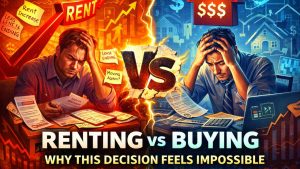
If you’re buying your first home, it can feel like there are a lot of big decisions to make all at once. One of them is this:
I talk to buyers about this from time to time and there’s no one-size-fits-all answer. The right choice depends on your finances, your goals, and how stable your situation is.
In this article, I’ll walk you through both options so you can figure out what makes the most sense for you.
What is a starter home?
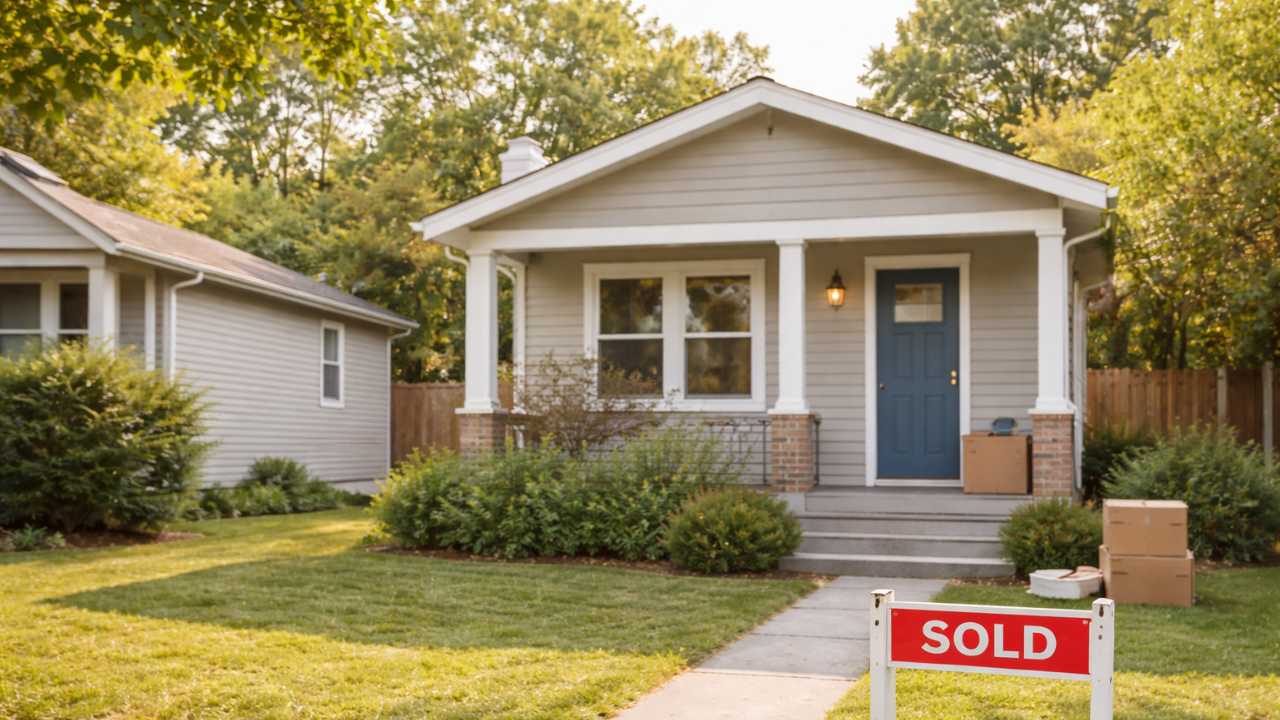
A starter home is usually a smaller, more affordable property that helps you get into the market sooner.
This could be:
- A condo or townhouse
- A smaller detached home
- A home in a more affordable neighbourhood
How it works:
You buy something you can comfortably afford today, even if it’s not your dream home. The goal is to build equity over time and upgrade later.
Key characteristics:
- Lower purchase price
- Lower down payment required
- Often fewer features or less space
- May need updates or renovations
Why some buyers choose it:
Many first-time buyers choose a starter home because it allows them to stop renting and start building equity sooner. It’s a practical way to get into the market without overextending yourself.
What is a forever home?
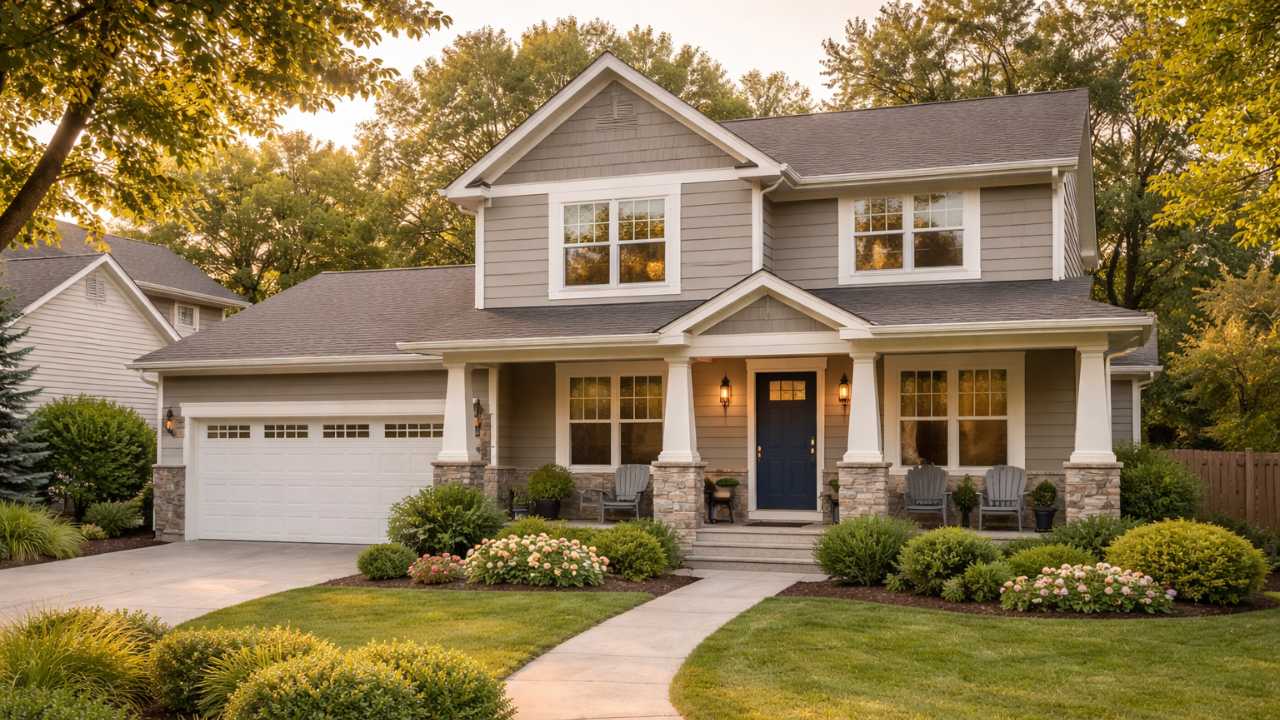
A forever home is a property you plan to stay in long-term — 20+ years or even into retirement.
It’s closer to what you actually want in the long run.
How it works:
Instead of buying something temporary, you stretch a bit more (within reason) to buy a home that fits your future lifestyle.
Key characteristics:
- Higher purchase price
- More space or better location
- Fewer compromises
- Designed for long-term living
Why some buyers choose it:
Some buyers want to avoid moving again in a few years. They prefer stability, especially if they’re planning for a family or long-term roots in one area.
What are the pros and cons of each?
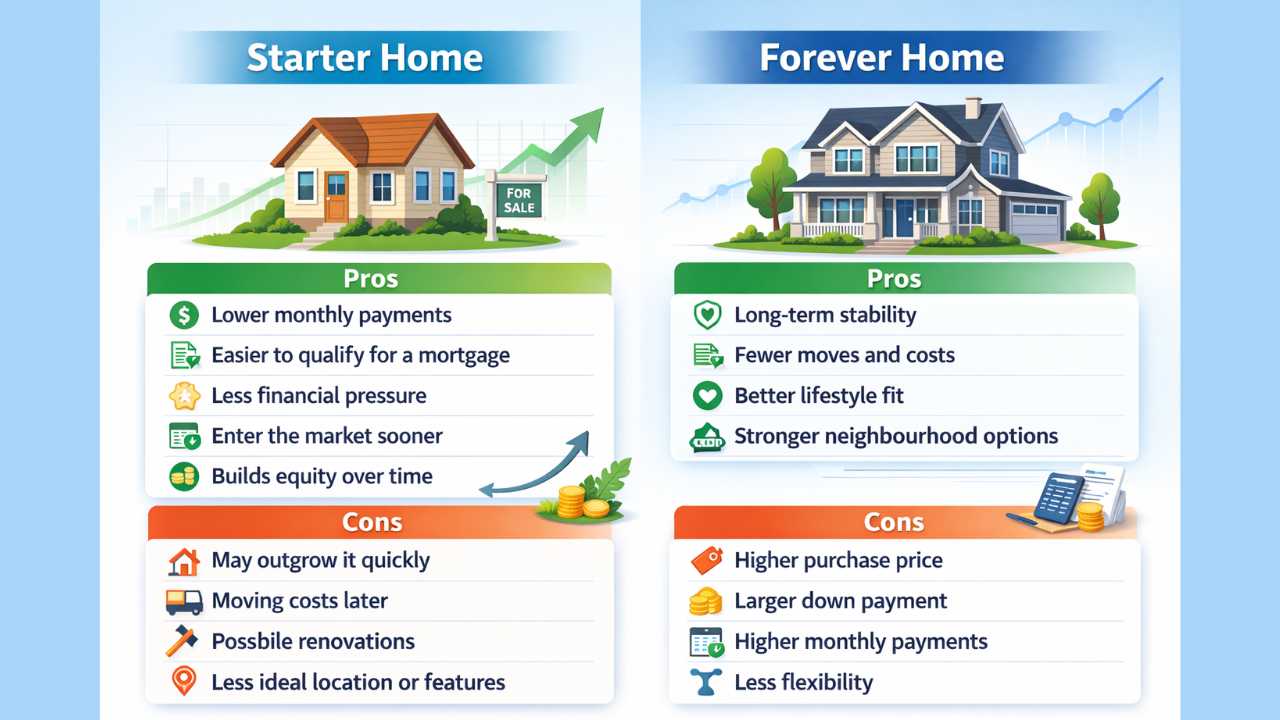
A starter home offers a more accessible way to enter the market, with lower monthly payments, easier mortgage qualification, and less financial pressure, while allowing you to begin building equity sooner. However, it may come with trade-offs such as outgrowing the space, future moving costs, potential renovations, and compromises on location or features.
In contrast, a forever home provides long-term stability, fewer moves and transaction costs, and a better overall fit for your lifestyle—often in a more desirable neighbourhood—but requires a higher purchase price, a larger down payment, higher monthly payments, and less flexibility if your circumstances change.
Which option is better for first-time buyers?
This is where things get personal. Let me walk you through some real-world situations I see all the time.
If income stability is a concern:
A starter home is often the safer choice. It keeps your payments manageable and gives you breathing room if life changes.
If affordability is tight:
A starter home can help you get into the market without stretching your budget too far. This is especially important with today’s interest rates.
If you expect your income to grow:
Some buyers choose a forever home because they know their earnings will increase. But this needs to be approached carefully — you don’t want to rely too much on future income.
If you value flexibility:
Starter homes offer more flexibility. If you need to move for work or life changes, you’re not tied to a large financial commitment.
If you want long-term stability:
A forever home makes sense if you plan to stay in one place for many years and want to avoid the stress and cost of moving again.
If you’re thinking about family soon:
A forever home may save you from needing to upgrade in just a few years.
What mistake do many first-time buyers make?

The biggest mistake I see is this:
I completely understand the feeling. You want to get it right the first time. But stretching your budget too far can create stress very quickly.
On the flip side, some buyers go too conservative. They buy something they outgrow in a year or two, which leads to another move sooner than expected.
The key is balance. You don’t need the perfect home. You need the right home for your current stage of life.
How does a mortgage broker help you decide?
This is where working with a mortgage broker can really help. When I sit down with clients, we don’t just look at what you can afford — we look at what makes sense for your life.
That includes:
- Your income and job stability
- Your monthly comfort level
- Future plans (family, career, relocation)
- Your risk tolerance
Sometimes the numbers clearly point to a starter home. Other times, a forever home is absolutely doable without adding stress. The goal is to make a decision based on your full financial picture — not just the maximum price a bank approves you for.
What’s my advice as a mortgage broker?

At the end of the day, there’s no universal right answer. A starter home can be a smart, low-risk way to enter the market. A forever home can offer long-term stability and fewer moves. It really comes down to what fits your financial situation, your goals, and your comfort level.
If you’re trying to decide between starter home and forever home, the best next step is understanding what your mortgage options actually look like. Book a call with me to get started.
How an Alberta mortgage broker helps you choose between a starter home and a forever home
The decision is a budget question before it’s a house question. Here’s what we work through:
- We look at what you can comfortably carry each month, not just the maximum a bank will approve.
- We factor in your income stability and how your plans change the answer.
- We show what the down payment and qualifying look like at each price point, side by side.
- We price in the costs that come later — moving again, renovations, a second set of closing costs.
- We help first-time buyers across Calgary, Edmonton and all of Alberta.
Not sure which one your budget actually supports?
Let’s look at the numbers for both before you start shopping — it usually makes the decision obvious.
Apply Online → Book a Discovery Call → Serving Calgary, Edmonton & all of Alberta · Mortgages for Less with INDI MortgageStarter home vs forever home: common questions
What is a starter home?
What is a forever home?
Should a first-time buyer choose a starter home or a forever home?
What are the downsides of buying a starter home?
What are the downsides of buying a forever home first?
What is the biggest mistake first-time buyers make?
How does a mortgage broker help you decide?
This article is general information for Alberta homebuyers, not financial, mortgage, tax or legal advice. It reflects market conditions as of March 2026; rates, prices and lender guidelines change. Any mortgage is subject to lender approval. Please speak with a licensed mortgage professional about your specific situation. Mortgages for Less with INDI Mortgage.