With the Bank of Canada holding the overnight rate for months, and with the war in Iran, mortgage interest rates have been making moves.
Buyers and homeowners alike are always wondering whether they should go with a fixed rate or a variable one, and with current events in commotion, the decision feels even more pressing.
Should I go fixed or variable right now?
Let’s talk about it so you can make a confident decision, whether you’re buying your first home in Alberta or renewing your mortgage this year.
Where are mortgage rates sitting right now?

As of spring 2026, we’re in a very different market than even a year ago.
The Bank of Canada has been holding its policy rate around 2.25%, and most economists expect that to stay fairly stable through the year. The Bank’s rate directly impacts variable mortgage rates, which went up temporarily after the war in Iran began, but have already started to come back down.
But fixed rates have continued to go up. So what’s going on?
Why are fixed rates moving even when the Bank of Canada isn’t?
A lot of people assume fixed rates follow the Bank of Canada but they actually move independently.
Fixed rates are driven by bond yields, and right now those are reacting to things like inflation, global uncertainty, and trade risks.
The market is uncertain, and that’s why we’re seeing fixed rates showing upward pressure and why lenders have been adjusting their pricing.
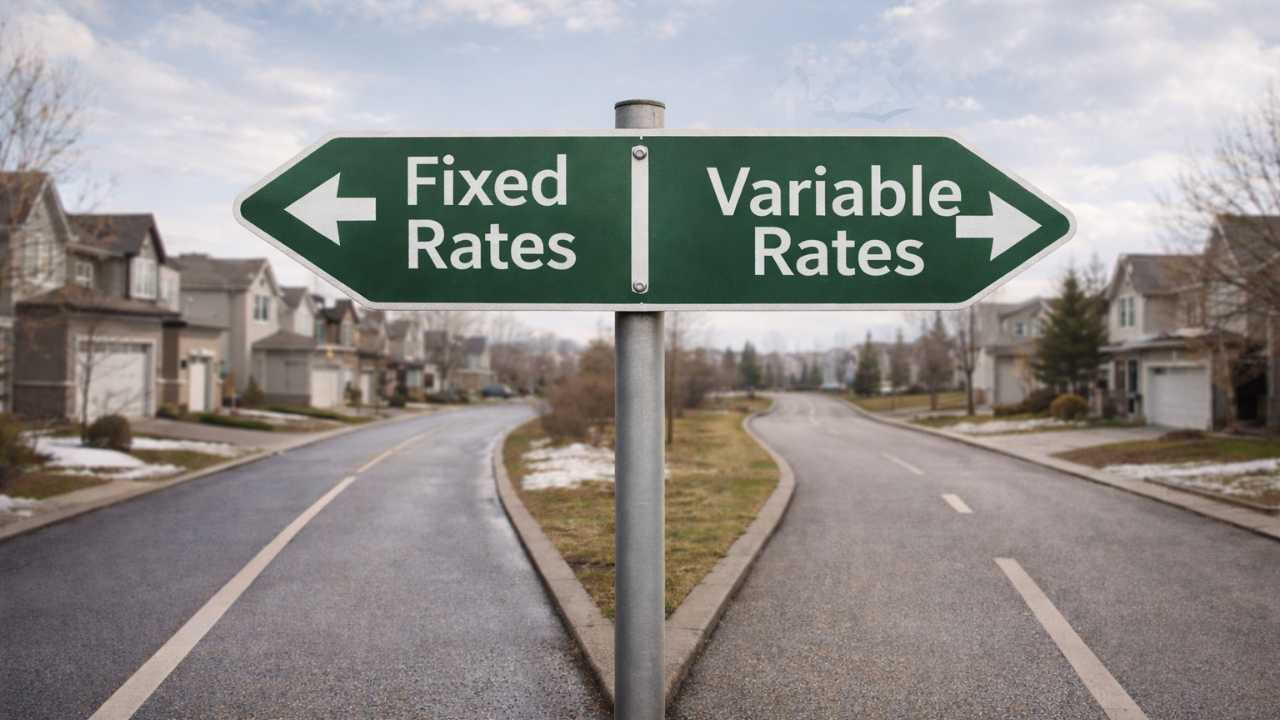
Fixed vs variable: what’s the real difference today?
Fixed rates right now are higher than variable rates, which they usually are. Having a fixed rate means you have a stable payment and a measure of protection against rising interest rates — at least until the end of your term.
Variable rates right now are lower than fixed rates, as usual. Which means the payments fluctuate with the rate. However, variable rate mortgages often offer more flexibility and lower penalties.
Historically, variable rates are usually cheaper than fixed by about 0.25% to 1%. But the trade-off is uncertainty.
What is a variable rate with a fixed payment?

One option many people aren’t aware of is a variable rate mortgage with a fixed payment. This means your payment is the same every month but the amount that goes toward your principal vs the interest can change.
This option gives you security when it comes to planning your monthly finances. But it does come with some considerations.
If the variable interest rate climbs, the amount you pay toward the principal is less, which increases how long it will take to pay off your mortgage. If the rate climbs too high, your payment may not be enough to cover even the interest. In that scenario your lender will require you to increase your payments or switch to a fixed rate.
The risk may be more than some buyers are willing to take. But the fact that variable rates are historically lower than fixed rates makes it worth it for many buyers.
What does this mean for Alberta buyers and homeowners?
Most experts now agree that rates are likely to stay fairly flat this year. There’s a possibility of small increases and big rate cuts are not expected. We’re in a balanced, but uncertain market.
That means you don’t need to rush but waiting to buy (or to refinance) probably won’t get you dramatically lower rates.
The right mortgage today isn’t just about the lowest rate. It’s about your risk tolerance, your timeline and your financial flexibility.
That’s where working with a broker really helps.
What am I telling Alberta clients right now?

Right now I’m mostly suggesting my clients go for fixed rates. For people who can accept a bit of risk I am recommending a variable rate but with a fixed payment. Some lenders have this option and it generally offers an interest rate about half of a percent lower than the fixed rate would be.
If you want help figuring out what makes the most sense for your situation, reach out any time. I’m always happy to walk you through it.
How an Alberta mortgage broker helps with the fixed vs variable decision
The lowest number on a rate sheet is rarely the whole answer. Here is what we work through before you commit a term:
- We separate what drives each rate — the Bank of Canada for variable, bond yields for fixed — so you know what would actually have to happen for your payment to change.
- We price fixed, variable and variable-with-a-fixed-payment side by side, since not every lender offers the third option.
- We put a real monthly payment against each, instead of comparing rates in the abstract.
- We look at the penalty and prepayment terms, because variable mortgages often carry more flexibility and lower penalties than fixed.
- We stress the trigger-rate scenario on a fixed-payment variable, so you know in advance what happens if rates climb.
- We match the term to your timeline and your risk tolerance, whether you are buying a first home in Alberta or renewing this year.
Not sure whether to lock in?
Let’s look at your actual numbers, your timeline and what the lenders available to you are pricing today — then pick the term that fits.
Apply Online → Book a Discovery Call → Serving Calgary, Edmonton & all of Alberta · Mortgages for Less with INDI MortgageFixed vs variable in Alberta: common questions
Should I go fixed or variable in Alberta right now?
Why are fixed rates going up when the Bank of Canada is holding?
What is the Bank of Canada’s policy rate doing?
How much cheaper is a variable rate than a fixed rate?
What is a variable rate mortgage with a fixed payment?
What happens if rates climb on a variable rate with a fixed payment?
Should I wait for lower rates before buying or refinancing?
This article is general information for Alberta homebuyers and homeowners, not financial, mortgage, tax or legal advice. Rates, bond yields and lender pricing change constantly, the figures described here reflect the market at the time of writing, and any mortgage is subject to lender approval. Please speak with a licensed mortgage professional about your specific circumstances. Mortgages for Less with INDI Mortgage.