By Josh Tagg, mortgage broker · Mortgages for Less with INDI Mortgage · Calgary, serving all of Alberta ·
You’ve probably noticed mortgage rates still feel a bit… uncertain.
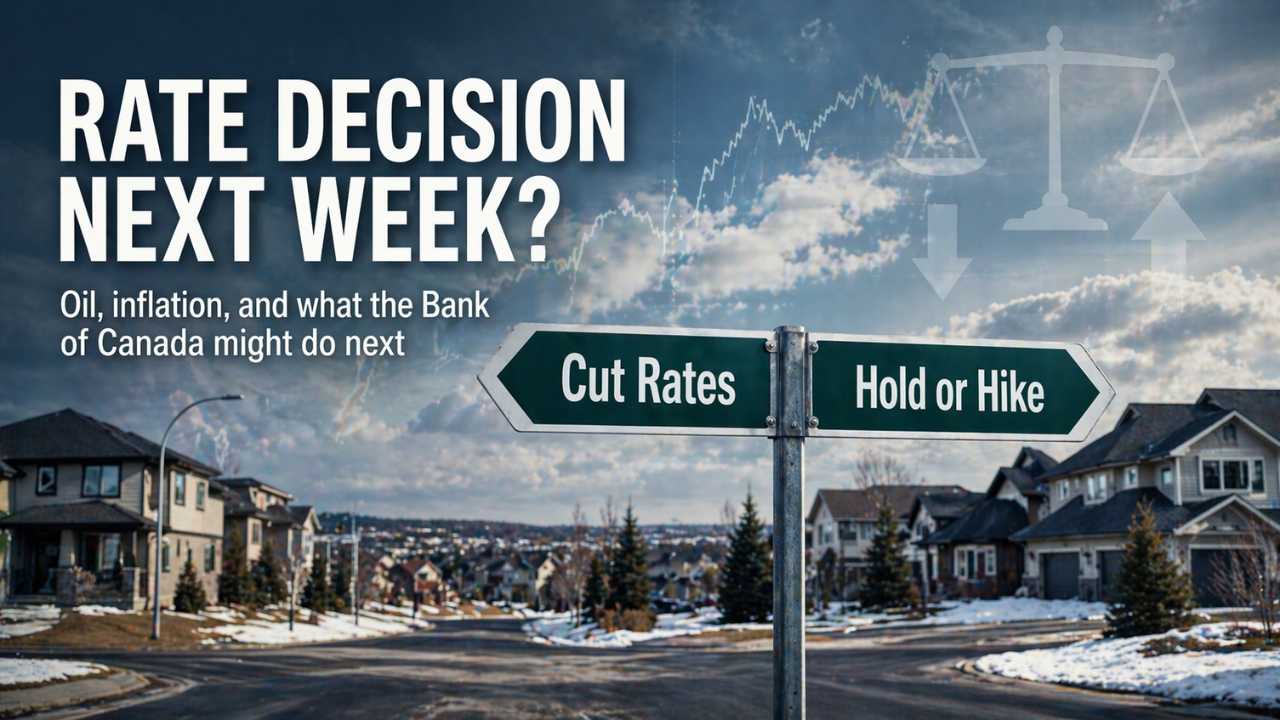
Over the past few weeks, we’ve had rising oil prices, higher inflation readings, and more cautious language from the Bank of Canada. A lot of folks are wondering right now:
What is the Bank of Canada likely to do at their next rate announcement?
What’s changed in the last few weeks?

The biggest shift has been oil.
Higher oil prices are starting to push inflation back up. Canada’s latest inflation reading came in around 2.4 percent, largely driven by rising gas prices tied to global conflict.
At the same time, Bank of Canada surveys are showing that both consumers and businesses are expecting higher inflation going forward.
That matters more than most people realize. When expectations rise, inflation can become harder to control. So now the Bank is dealing with a tougher balancing act. Inflation is climbing but the economy is not exactly booming. That’s why you’re hearing more cautious, slightly “hawkish” language from economists and the Bank itself.
What does “hawkish” actually mean for you?
When economists say the Bank has a “hawkish tilt,” they don’t mean a rate hike is coming immediately. They mean the Bank is becoming more concerned about inflation and less comfortable cutting rates.
A few months ago, rate cuts looked more likely but now they’re less certain, but the risk of future hikes has increased slightly. That’s a meaningful shift, even if nothing changes right away.
Why is the Bank of Canada being so careful?

The Governor of the Bank of Canada, Tiff Macklem, has been very clear about one thing: They don’t want to move too early or too late.
If they cut rates too soon, inflation could flare back up. If they raise rates too aggressively, they could slow the economy too much.
Oil makes this even trickier. It pushes inflation higher in the short term, but it doesn’t always lead to long-term inflation. So the Bank is trying to figure out whether this is temporary… or something more persistent.
What should you expect at next week’s rate announcement?
Based on everything we’re seeing right now, here’s the most likely outcome:
The Bank of Canada will hold its policy rate steady.
But the tone of the upcoming announcement is just as important as the decision itself.
What I expect:
- Rates stay the same
- The Bank acknowledges rising inflation risks
- The language leans more cautious or “hawkish”
- They leave the door open to hikes if inflation continues
In other words, no immediate change… but a clear signal that things could shift if inflation doesn’t settle back down.
What does this mean for fixed and variable rates?
This is where it starts to affect real decisions.
Fixed rates have already started moving higher again. That’s because bond yields tend to rise when inflation expectations increase.
Variable rates haven’t changed yet, since they follow the Bank of Canada’s policy rate. But the chance of near-term rate cuts has dropped and the risk of future increases has gone up slightly.
This creates a very different environment than we had earlier this year.
What am I telling my clients right now?

For Alberta buyers and homeowners, this is not a panic moment. But it is a planning moment.
If you’re buying, don’t assume rates will be lower in a few months. Make sure your budget still works if rates stay where they are. If you’re renewing, this is a good time to look at your options early. Rate holds are always a smart move in a shifting market.
Deciding between fixed and variable matters more right now than it did a few months ago.
What are the next steps?
Next week’s Bank of Canada announcement will likely be steady on the surface, but important underneath.
Rates may not move, but the direction of the market is becoming clearer — less confidence in rate cuts, and slightly more risk of rates staying higher for longer.
If you’re not sure how this affects your situation, it’s worth talking it through before making a decision. Book a call with me today.
How an Alberta mortgage broker helps around a rate announcement
Nobody gets paid to call the Bank of Canada correctly. What a broker can do is make sure the announcement finds you prepared instead of reacting:
- We put a rate hold in place early, so a renewal or a purchase isn’t exposed to whatever the next few weeks do.
- We stress the budget at today’s rates, not hoped-for ones, so the payment still works if nothing gets cheaper.
- We walk through fixed versus variable properly — fixed follows bond yields, variable follows the policy rate, and right now those two are telling different stories.
- We shop multiple lenders, because banks, monolines and alternative lenders all reprice on news like this at different speeds.
- We start renewals early, while there is still time to move lenders if your current one isn’t competitive.
- We translate “hawkish” into a monthly payment, so the decision is a number instead of a headline.
Want to know what this means for your mortgage?
Get a rate hold in place and see what your payment looks like at today’s rates — before the next announcement moves anything.
Apply Online → Book a Discovery Call → Serving Calgary, Edmonton & all of Alberta · Mortgages for Less with INDI MortgageBank of Canada rate decisions: common questions
What is the Bank of Canada likely to do at its next rate announcement?
What has actually changed in the last few weeks?
What does a “hawkish” Bank of Canada mean for me?
Why is the Bank of Canada being so careful right now?
Why are fixed rates rising when the policy rate hasn’t moved?
Should I wait for rates to fall before buying?
What should I do if my mortgage is coming up for renewal?
This article is general information for Alberta homebuyers and homeowners, not financial, mortgage, tax or legal advice. Inflation readings, bond yields, Bank of Canada decisions and mortgage rates change frequently, and any mortgage is subject to lender approval. Please speak with a licensed mortgage professional about your specific circumstances. Mortgages for Less with INDI Mortgage.