By Josh Tagg, mortgage broker · Mortgages for Less with INDI Mortgage · Calgary, serving all of Alberta ·
Canada’s economy has taken a surprising turn, and it’s creating a new interest-rate outlook that matters for anyone buying a home, renewing a mortgage, or planning for 2026. Recent economic data shows a mix of soft consumer spending and strong job growth. That combination is changing how markets think the Bank of Canada will act in the years ahead.
For Alberta homebuyers and homeowners, understanding these shifts can help you make smart financing decisions. Here’s what the latest numbers mean and how working with a mortgage broker like me, Josh Tagg, can help you navigate today’s market.
How did the November jobs report change interest rate expectations?

The biggest surprise came from the November labour market data. Canada’s unemployment rate fell by 0.4% and job growth was better than expected. This is important because stronger job numbers usually mean the economy is healthier than expected.
Traders reacted immediately. Financial markets now fully expect the next move from the Bank of Canada to be a rate hike by late 2026. Just one day earlier, markets were pricing in the possibility of even more rate cuts. That shift shows how powerful this jobs report was.
Economists at CIBC say the data suggests the Bank of Canada’s cutting cycle is likely finished. The Bank itself has hinted for months that rates are “about the right level” unless inflation or growth takes a sharper turn.
Why are spending and GDP still soft?
Even with stronger job numbers, other parts of the economy remain weak. Household spending has slowed significantly, with retail sales dropping in recent months. Consumption grew at just about 1.0% in the third part of the year, down from 4.5% in the second.
GDP also dipped in October, and Alberta felt additional pressure from events like the teachers’ strike.
These softer numbers would normally support more rate cuts, but the labour-market strength is shifting the balance.
How do U.S. tariffs add to the uncertainty?
The ongoing trade dispute with the United States continues to weigh on Canada’s economy. Tariffs raise prices and slow exports, and the Bank of Canada has warned that this kind of structural damage limits how much it can help by lowering interest rates. If tariffs keep pushing prices up, the Bank has even less room to cut rates.
What do Canadians expect interest rates to do next?
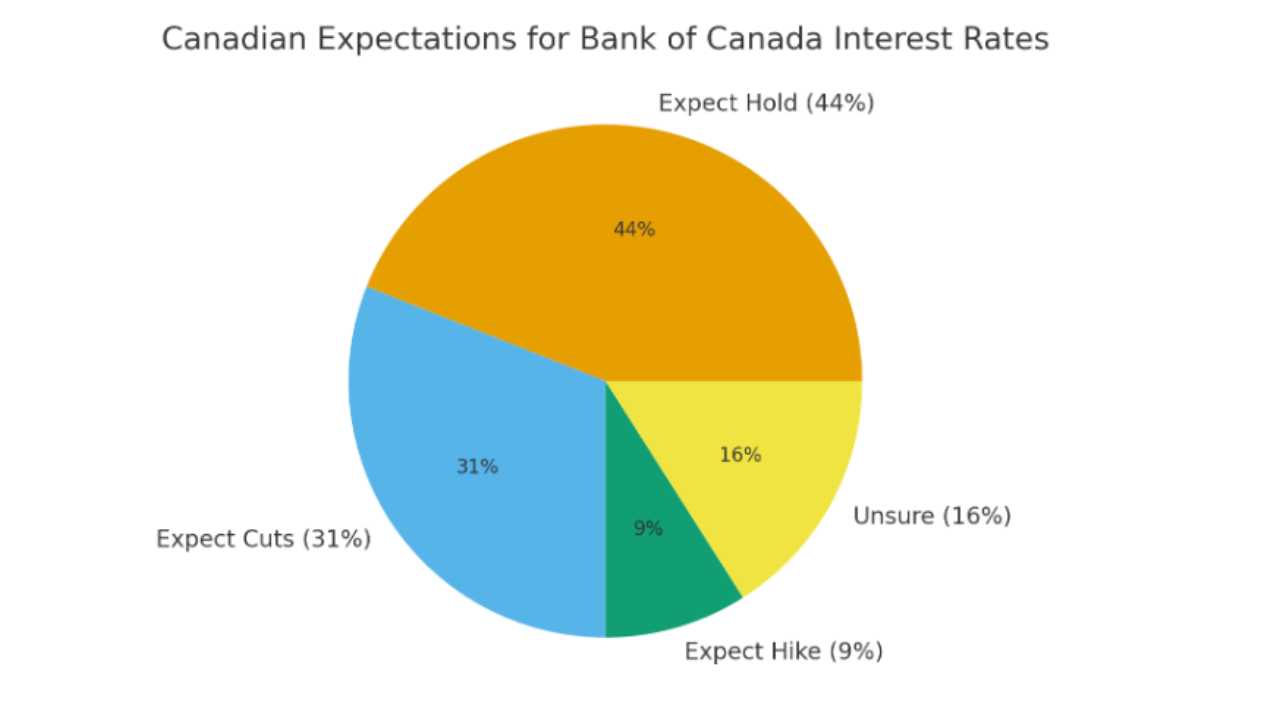
A new Nanos Research poll shows Canadian households are divided on where rates go next. Here’s how people responded:
| Expectation | Share of respondents |
|---|---|
| Expect a hold | 44% |
| Expect cuts | 31% |
| Unsure | 16% |
| Expect a hike | 9% |
When households expect rate cuts, many delay major purchases, which slows spending even further. Uncertainty tends to cool housing activity as buyers wait for clarity.
What does this mean for Alberta homebuyers?
For Albertans, the key takeaway is simple: rates may not fall much from here. Even though parts of the economy are slowing, the strong job market suggests the Bank of Canada will stay cautious.
The next formal rate announcement is on December 10, and most economists expect no change.
If you’re buying a home, renewing your mortgage, or looking at pre-approvals for 2026, now is the time to get clear advice on your options.
How can a mortgage broker help when rate expectations shift?
This is one of those moments when having an experienced mortgage broker on your side makes all the difference. Rate expectations are shifting quickly, and the best mortgage for you depends on more than just today’s numbers.
I help Alberta homebuyers understand:
• What current rate trends mean for fixed and variable mortgages
• How to protect yourself if rates rise sooner than expected
• Whether today’s market conditions make it better to lock in or stay flexible
• How to structure your mortgage to stay affordable even as the economy changes
Markets may be unpredictable, but your mortgage plan shouldn’t be. I keep clients informed, prepared, and confident—whether rates hold, fall, or rise. Contact me today!
How an Alberta mortgage broker helps when the rate outlook changes
When expectations swing from cuts to hikes in a single day, a broker turns the headlines into a plan for your file:
- Set up a pre-approval with a rate hold so a later increase doesn’t change your purchase budget.
- Compare fixed and variable options across banks, monolines and alternative lenders.
- Review a renewal offer against what other lenders are quoting before you sign.
- Structure the mortgage so the payment stays affordable if rates rise sooner than expected.
- Explain each Bank of Canada announcement and what it changes for you.
- Find a lender when your own bank has said no.
Buying, renewing or planning a pre-approval in Alberta?
Get clear advice on your options at today’s rates.
Apply Online → Book a Discovery Call → Serving Calgary, Edmonton & all of Alberta · Mortgages for Less with INDI MortgageQuestions about Canada’s December 2025 rate outlook
What changed in Canada’s interest-rate outlook in December 2025?
Was the Bank of Canada finished cutting rates?
If jobs were strong, why was the economy still called soft?
How do U.S. tariffs affect Canadian interest rates?
What did Canadians expect rates to do?
What did this mean for Alberta homebuyers?
This article was written in December 2025; interest rates, forecasts and market conditions have changed since then. It is general information for Alberta homebuyers and homeowners, not financial, mortgage or legal advice. Rates, products and qualification rules vary by lender and can change. Please speak with a licensed mortgage professional about your specific circumstances. Mortgages for Less with INDI Mortgage.