
By Josh Tagg, mortgage broker · Mortgages for Less with INDI Mortgage · Calgary, serving all of Alberta ·
The Bank of Canada has once again left its policy interest rate unchanged at 2.25%. This marks the sixth consecutive rate announcement without a change, suggesting the Bank believes its current approach remains appropriate for the Canadian economy.
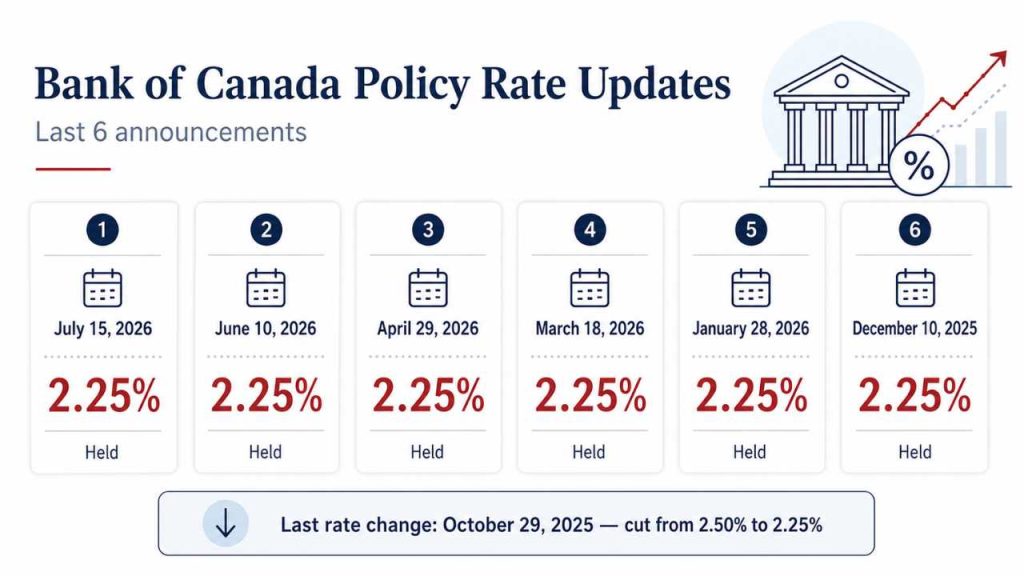
At the same time, many Albertans are looking at their grocery bills, gasoline costs, mortgage payments and other household expenses and wondering how inflation can supposedly be under control.
The answer is that the official inflation numbers and our personal experience with rising prices are measuring two different things. Inflation may be moving in the right direction, but that does not mean prices are returning to where they were—or that household budgets are suddenly becoming comfortable again.
Why Did the Bank of Canada Hold Its Rate?
The Bank of Canada uses its policy rate to influence borrowing costs, spending and inflation throughout the economy. When inflation is running too high, the Bank may raise rates to reduce demand. When the economy is struggling and inflation is under control, it may lower rates to encourage borrowing and spending.
At its July 15, 2026 announcement, the Bank kept the policy rate at 2.25%. It described the Canadian economy as weak but showing signs of improvement, with growth expected to pick up gradually.
This creates a difficult balancing act. Raising rates could place even more pressure on households and businesses while economic growth remains modest. Cutting rates too quickly, however, could stimulate demand and make inflation harder to control.
For now, the Bank appears comfortable waiting for more information before making another move.
Why Doesn’t Headline Inflation Tell the Whole Story?
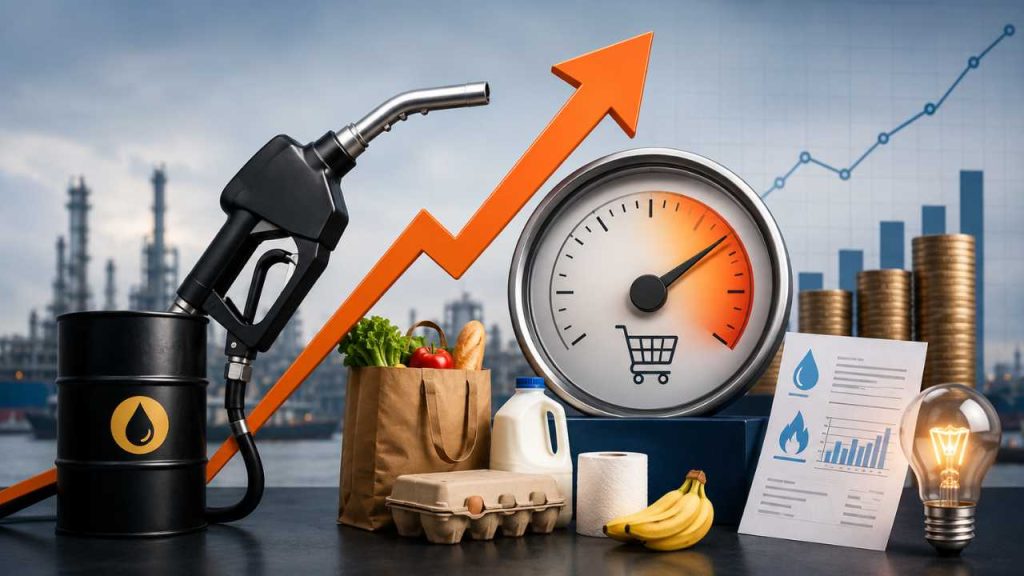
Canada’s headline inflation rate has recently been pushed higher by gasoline and energy prices. These prices can change quickly in response to oil markets, refinery conditions, geopolitical conflict and supply disruptions.
The Bank does not necessarily want to respond to every temporary increase in gasoline prices by raising interest rates. Higher mortgage rates will not produce more oil, resolve an international conflict or immediately lower the price at the pump.
Instead, the Bank looks at several measures to determine whether inflation is becoming widespread and persistent throughout the economy.
Its latest forecast expects inflation to ease to approximately 2.5% during the second half of 2026 and return to the 2% target in early 2027. However, that forecast depends heavily on oil and gasoline prices declining as expected.
That is a significant assumption. Oil prices are volatile, and events in the Middle East or elsewhere can quickly change the outlook.
Does Lower Inflation Mean Lower Prices?
This is where the official inflation message can feel disconnected from everyday life.
When economists say inflation is falling, they usually mean prices are rising more slowly. They do not mean prices are returning to their previous levels.
Imagine that an item increased from $100 to $110 during a period of high inflation. If inflation then slows, that item might rise to $112 the following year instead of $120. The rate of increase has improved, but the item still costs considerably more than it did before.
The same applies to food, insurance, utilities, rent, property taxes, vehicle expenses and many other household costs. Even when the annual rate of inflation improves, families are still paying the accumulated increases from previous years.
That is why people can hear that inflation is approaching the Bank’s target while continuing to feel that nearly everything is expensive.
Why Does Alberta Experience Inflation Differently?

National inflation figures combine price changes from across the country into one measurement. They are useful for understanding the broader economy, but they will never perfectly reflect the experience of every household or province.
Alberta families may be particularly sensitive to changes in gasoline, natural gas, electricity, insurance and housing-related costs. Someone who drives a long distance to work, heats a larger detached home and has several children to feed may experience inflation very differently from someone living in a smaller home near public transit.
Your personal inflation rate depends on where your money goes.
A household that spends a large portion of its income on categories experiencing rapid price increases may feel much more pressure than the headline number suggests. This does not mean the official data is necessarily wrong. It means an average cannot capture every family’s circumstances.
What Does This Mean for Mortgage Rates?
The Bank of Canada’s policy rate has the most direct effect on variable-rate mortgages and home equity lines of credit. When the Bank changes its rate, lenders normally adjust their prime rates shortly afterward.
Because the policy rate remained unchanged, borrowers with variable-rate products should not see a Bank of Canada-related change to their rates following this announcement.
Fixed mortgage rates work differently. They are influenced primarily by Government of Canada bond yields, which react to inflation expectations, economic data, global events and financial-market sentiment.
This means fixed rates can move even when the Bank of Canada does nothing. If investors become concerned that inflation will remain elevated, bond yields may rise and place upward pressure on fixed mortgage rates. If economic conditions weaken or inflation expectations fall, fixed rates may move lower.
Waiting for the next Bank of Canada announcement does not guarantee that fixed rates will remain where they are in the meantime.
Should You Wait for Rates to Fall?

Someone purchasing a home should consider the price, monthly payment, available inventory and whether the property meets their needs. A slightly lower mortgage rate may not help if home prices rise, the right property is no longer available or personal circumstances change.
Homeowners approaching renewal should begin reviewing their options well before the maturity date. This creates time to compare lenders, examine fixed and variable choices and determine whether any changes to the mortgage are needed.
The lowest advertised rate is also not always the best option. Prepayment privileges, penalties, portability, refinancing restrictions and other mortgage terms can have a much larger financial impact over time.
What Should Alberta Borrowers Watch Next?
The Bank of Canada currently believes inflation will gradually return to approximately 2% by early 2027, while economic growth improves modestly.
That forecast is possible, but it is not guaranteed. Oil prices, international conflicts, tariffs, the Canadian dollar and changes in consumer spending could all affect the path ahead.
For Alberta homeowners and buyers, the important takeaway is not that everything is suddenly fine. It is that the Bank does not currently see enough evidence to justify either another rate cut or a rate increase.
Meanwhile, household affordability remains a real concern. Inflation may be slowing, but many of the higher prices Canadians have absorbed over the past several years are still part of the monthly budget.
Rather than trying to predict the exact date of the next rate change, it is usually more helpful to build a mortgage strategy that works under several possible scenarios. That may include comparing fixed and variable rates, protecting your cash flow and choosing mortgage terms that give you the flexibility you need.
How Can a Mortgage Broker Help?

I’m Josh Tagg, a mortgage broker serving clients throughout Alberta. When you are buying a home, renewing a mortgage or reviewing your current financing, I can help you understand the available options and make a decision based on your complete financial situation—not just the latest headline.
How an Alberta mortgage broker helps when rates are on hold
A hold is not a reason to do nothing. It is a window to get organized:
- We compare fixed and variable side by side using your actual payment, not a headline rate, so you can see what each costs under several scenarios.
- We start renewal reviews early — well before the maturity date — so there is time to shop lenders instead of signing whatever arrives in the mail.
- We read the fine print that costs real money: prepayment privileges, penalty calculations, portability and refinancing restrictions.
- We hold a rate for you while you shop, so a move in bond yields between now and possession does not change your budget.
- We look at your whole picture — income, debts, cash flow and plans — rather than optimizing one number in isolation.
- We tell you plainly when waiting is the better call, and when it simply costs you the house you wanted.
Wondering what a hold means for your mortgage?
Whether you are buying, renewing or just want to know whether fixed or variable fits your situation, let’s look at your actual numbers.
Apply Online → Book a Discovery Call → Serving Calgary, Edmonton & all of Alberta · Mortgages for Less with INDI MortgageBank of Canada rate holds and inflation: common questions
Did the Bank of Canada change its interest rate in July 2026?
If inflation is falling, why are prices still so high?
When does the Bank of Canada expect inflation to reach 2%?
Does a rate hold change my variable-rate mortgage?
Can fixed mortgage rates move if the Bank of Canada does nothing?
Why does inflation feel worse in Alberta than the national number suggests?
Should I wait for rates to fall before buying a home?
This article is general information for Alberta homebuyers and homeowners, not financial, mortgage, tax or legal advice. Interest rates, Bank of Canada decisions, inflation forecasts and lender pricing change over time, and every mortgage is subject to lender approval. Please speak with a licensed mortgage professional about your specific circumstances. Mortgages for Less with INDI Mortgage.