The First Home Savings Account (FHSA) is one of the most valuable tools available to Canadian first-time home buyers.
It combines some of the best features of both an RRSP and a TFSA. Contributions are tax deductible, investments can grow tax-free, and qualifying withdrawals to purchase a home are also tax-free. For many buyers, this means building a down payment faster while reducing their income taxes along the way.
What Is an FHSA?
The FHSA is a registered savings account designed specifically to help Canadians save for their first home. To qualify, you must be a resident of Canada, at least 18 years old, and considered a first-time home buyer.
Many people are surprised to learn that you may still qualify even if you owned a home in the past. In general, neither you nor your spouse or common-law partner can have owned and lived in a home as your principal residence during the current year or the previous four calendar years.
How Much Can You Contribute?
You can contribute up to $8,000 per year, with a lifetime contribution limit of $40,000.
Unused contribution room can be carried forward, up to a maximum of $8,000. This means that opening an FHSA sooner rather than later can be beneficial, even if you are still a few years away from purchasing a home.
Why should first-time buyers pay attention to the FHSA?
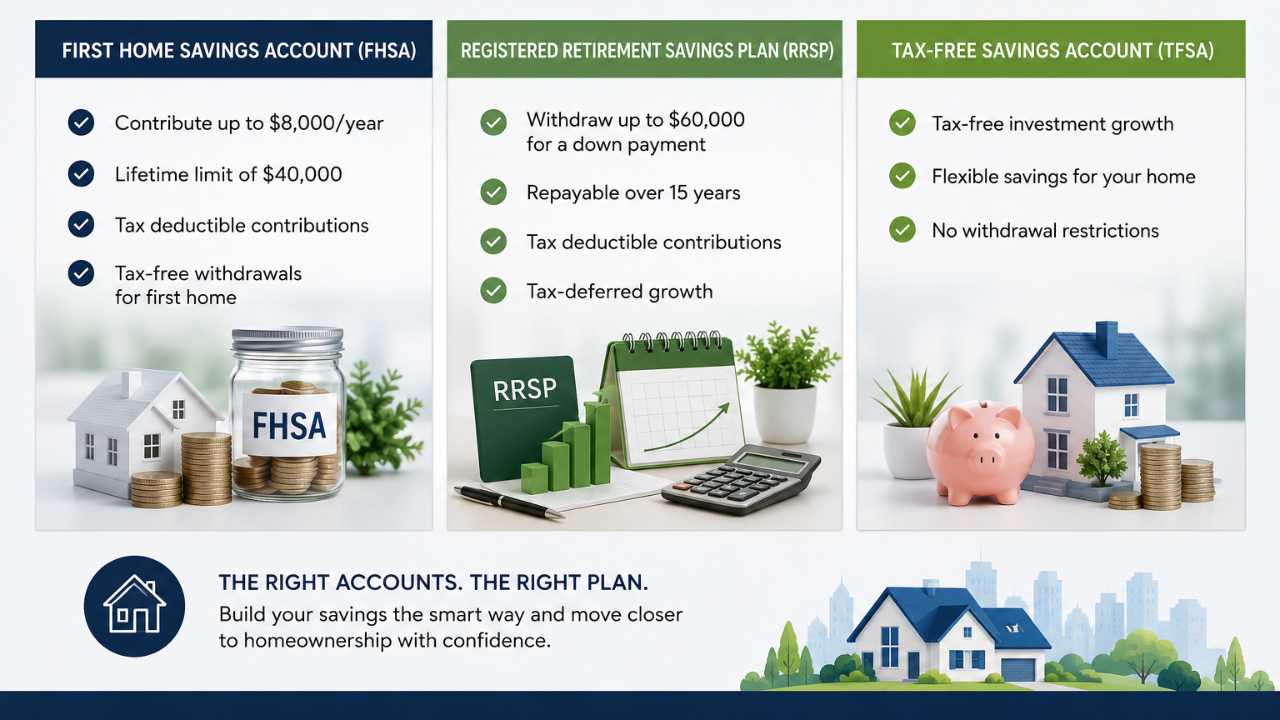
Most savings plans involve a tradeoff. RRSP contributions provide a tax deduction, but withdrawals are eventually taxed. TFSA withdrawals are tax-free, but contributions are not deductible.
The FHSA offers both advantages. You receive a tax deduction when you contribute, and qualifying withdrawals for a home purchase are tax-free. For many first-time buyers, this can translate into thousands of dollars in tax savings while helping build a larger down payment.
What Can You Invest In?
An FHSA can hold more than just cash. Depending on the financial institution, you may be able to invest in GICs, mutual funds, ETFs, stocks, bonds, or high-interest savings products.
The right investment choice depends on your timeline. Buyers planning to purchase within the next year or two may prefer safer options, while those with longer timelines may choose investments with greater growth potential.
Can You Use the FHSA and Home Buyers’ Plan Together?
Yes.
One of the biggest advantages of the FHSA is that it can be used alongside the RRSP Home Buyers’ Plan (HBP). This allows eligible buyers to combine funds from both programs, potentially creating a much larger down payment.
Mortgage Broker Advice

If you’re planning to buy your first home within the next few years, opening an FHSA should be near the top of your to-do list.
Even if you’re not ready to buy today, opening an account early allows you to start building contribution room and taking advantage of the tax benefits available. For many first-time buyers, the FHSA can become an important part of their overall home-buying strategy and help make homeownership happen sooner than expected.
If you’d like to discuss how the FHSA fits into your down payment and mortgage plans, contact me for help or for a free consultation.
How an Alberta mortgage broker helps you use an FHSA
Opening the account is the easy part. Turning it into an approved mortgage is where a broker earns their keep:
- We work out how much down payment you actually need for the price range you are shopping, so you know what the FHSA has to reach.
- We show you whether stacking the FHSA with the RRSP Home Buyers’ Plan gets you to a bigger down payment — and what each one costs you later.
- We tell you what a lender will want as proof the down payment is yours, so an FHSA withdrawal doesn’t hold up your file days before closing.
- We flag when your purchase timeline argues for safer investments inside the account, because a down payment you need in 12 months shouldn’t be riding the market.
- We pre-approve you across multiple lenders, not just the bank that happens to hold your FHSA.
- We map the whole plan — savings, timeline and mortgage — so opening the account today has a purchase date attached to it.
Saving in an FHSA? Let’s build the mortgage plan around it.
Find out how much down payment you need, how the FHSA and Home Buyers’ Plan work together, and what you qualify for today.
Apply Online → Book a Discovery Call → Serving Calgary, Edmonton & all of Alberta · Mortgages for Less with INDI MortgageFHSA: common questions
What is a First Home Savings Account?
Who qualifies to open an FHSA?
How much can you contribute to an FHSA?
Why is the FHSA better than an RRSP or a TFSA for a down payment?
What can you invest in inside an FHSA?
Can you use the FHSA and the RRSP Home Buyers’ Plan together?
Should you open an FHSA if you aren’t buying yet?
This article is general information for Alberta homebuyers, not financial, mortgage, tax or legal advice. FHSA and Home Buyers’ Plan rules, contribution limits and eligibility requirements are set by the federal government and can change; confirm your own situation with the Canada Revenue Agency or a qualified tax professional. Any mortgage is subject to lender approval. Please speak with a licensed mortgage professional about your specific circumstances. Mortgages for Less with INDI Mortgage.