
By Josh Tagg, mortgage broker · Mortgages for Less with INDI Mortgage · Calgary, serving all of Alberta ·
Divorce has a way of turning things that used to be simple into surprisingly complicated questions. Who keeps the couch? Who gets Christmas morning with the kids? And what exactly happens to that enormous mortgage you signed together back when you were still agreeing on paint colours?
If you own a home together, figuring out the mortgage is usually one of the bigger financial decisions in a separation.
Does divorce remove you from the mortgage?
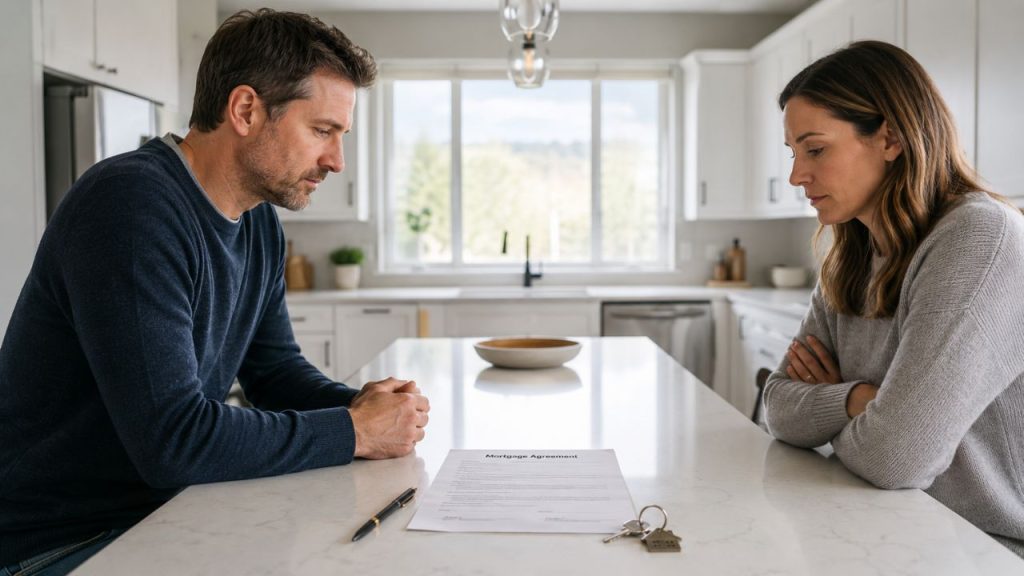
If both spouses are borrowers on the mortgage, separating doesn’t automatically remove either person from the loan. Joint borrowers remain responsible for the debt until the lender agrees to a change or the mortgage is paid out.
That is important even if your separation agreement says one spouse will make the payments. As far as the lender is concerned, the existing mortgage contract is still the existing mortgage contract.
In Alberta, property division following the breakdown of a marriage is governed by the Family Property Act. Similar property-division rules can also apply to qualifying adult interdependent partners.
This is one reason I recommend getting both legal and mortgage advice early. Your lawyer deals with who is entitled to what. I deal with whether the mortgage plan you have in mind can actually be financed.
Option 1: Should you sell the family home?
Sometimes the cleanest solution is to sell the property, pay off the mortgage and divide the remaining equity according to your agreement.
The catch is that selling during a closed mortgage term may mean breaking the mortgage early, which can result in a prepayment penalty. There may also be realtor fees, legal fees and other selling costs to account for before deciding how much equity is actually available.
Option 2: Can one spouse keep the home?

This is often the preferred option when children are involved or one person simply wants to stay.
Usually, the person keeping the property needs to qualify for the mortgage based on their own financial situation. That means looking at income, debts, credit and the size of the mortgage required.
There may also be an equity buyout. For example, if one spouse is entitled to $100,000 of the home’s equity, the new financing may need to cover the existing mortgage plus some or all of that amount.
This is where planning before signing the final separation agreement can be extremely helpful. Agreeing that “Alex keeps the house” is considerably easier than discovering afterward that Alex’s income says otherwise.
Option 3: Can you keep the home together temporarily?
Some separating couples decide not to sell or refinance immediately. One spouse may remain in the home while both stay on the mortgage for a period of time.
Alberta courts can also issue an Exclusive Possession Order when separating spouses or adult interdependent partners cannot agree about who will remain in the home. That determines possession temporarily; it does not itself settle the final division of the property.
Keeping a mortgage jointly can work, but both people’s credit and borrowing ability may remain tied to that debt. It needs to be approached carefully.
Why talk to your mortgage broker before you decide?

Divorce is difficult enough without finding out three weeks before a deadline that the financing doesn’t work.
If you’re separating in Alberta and one of you hopes to keep the home, I can review the mortgage, estimated equity, income and debts and help determine what financing options may be available. The earlier we look at the numbers, the more options we usually have.
And unlike deciding who gets the air fryer, this is one decision that’s worth slowing down for.
How an Alberta mortgage broker helps with a separation
Your lawyer settles who is entitled to what. A broker answers the other half of the question — whether the plan can actually be financed:
- We check whether one spouse can qualify alone on their own income, debts and credit before the agreement is signed.
- We size the new mortgage so it covers the existing balance plus any equity buyout.
- We estimate the prepayment penalty and selling costs so you know what equity is really left if you sell.
- We shop multiple lenders, because policies on separation agreements and buyouts differ from one lender to the next.
- We map out what happens if you stay on the mortgage jointly, and what it means for both people’s future borrowing.
- We work alongside your lawyer so the financing and the agreement line up instead of colliding three weeks before a deadline.
Separating in Alberta? Let’s find out what the financing can actually do.
Before you sign anything, get a clear read on the mortgage, the equity and what one income can support. A short conversation now usually means more options later.
Apply Online → Book a Discovery Call → Serving Calgary, Edmonton & all of Alberta · Mortgages for Less with INDI MortgageDivorce and your mortgage in Alberta: common questions
Does divorce remove my name from the mortgage?
My separation agreement says my ex will make the payments. Am I off the hook?
What happens if we sell the home?
Can one spouse keep the house after a separation?
What is an equity buyout, and does the new mortgage cover it?
Can we both stay on the mortgage for a while?
What is an Exclusive Possession Order in Alberta?
This article is general information for Alberta homeowners, not financial, mortgage, tax or legal advice. Family property rules, court orders and separation agreements are legal matters — please speak with a lawyer about your entitlements, and with a licensed mortgage professional about financing. Every mortgage is subject to lender approval. Mortgages for Less with INDI Mortgage.