By Josh Tagg, mortgage broker · Mortgages for Less with INDI Mortgage · Calgary, serving all of Alberta ·
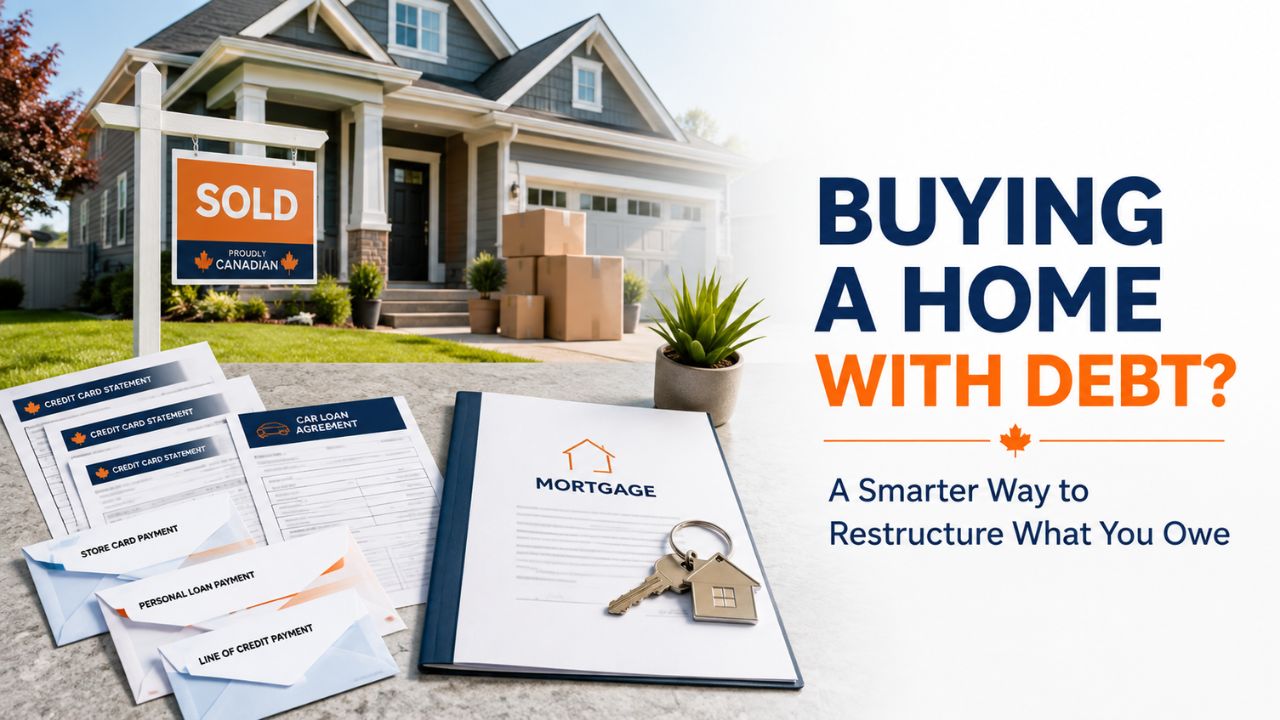
Buying a home while carrying debt can feel like trying to move a sofa through a narrow doorway while also holding three grocery bags. Technically possible, but some planning would make the experience considerably less painful.
A question I often hear is, “Can I roll my credit cards and other debts into the mortgage when I buy a home?” Sometimes there is a way to accomplish a similar goal, but it is important to understand what a purchase mortgage can—and cannot—do.
Can you add your debts to the purchase price?

A purchase mortgage is used to buy the property. You generally cannot purchase a $500,000 home, add $30,000 of credit-card debt and simply apply for a $530,000 mortgage.
The mortgage is based on the property’s purchase price and lending value, subject to the required down payment. For homes below $1.5 million, the minimum down payment generally begins at 5%, with 10% required on the portion above $500,000. Homes priced at $1.5 million or more require at least 20% down.
Unfortunately, the bank does not consider your collection of Visa statements to be a charming architectural feature worth financing.
Can your down-payment strategy free up cash to clear debt?
Suppose you have enough savings to make a 20% down payment, but you also have high-interest debt. Depending on your qualifications, it may make sense to use a smaller down payment and direct some of your available cash toward paying off that debt.
You are not technically adding the debts to the mortgage. Instead, you are rearranging how your own money is used.
For example, reducing the down payment could leave enough cash to eliminate a credit card charging 20% interest. However, putting down less than 20% will normally require mortgage default insurance, and the larger mortgage will increase your payment. The numbers need to be compared carefully before deciding.
Does paying off debt help you qualify for more?
Lenders consider your monthly debt obligations when calculating how much mortgage you can afford. Car loans, credit cards and lines of credit can reduce your purchasing power—even when the balances do not seem particularly large.
In some cases, paying off a debt before closing can improve the application enough to make the purchase possible. The lender may require proof that the balance has been paid and the account may need to be closed or reduced before the mortgage funds.
This should be planned before removing conditions, not three days before possession while everyone involved develops a nervous eye twitch.
How is refinancing later different from buying now?
Once you own a home and build sufficient equity, refinancing may allow you to borrow against that equity and consolidate other debts. Homeowners can usually borrow up to 80% of the property’s value, including the existing mortgage balance.
That does not mean buying today automatically creates enough equity to refinance tomorrow. Your down payment, property value, closing costs, qualification and lender policies all matter.
Is a lower payment the same as less debt?
Moving high-interest debt into a mortgage can reduce the interest rate and monthly payment. It can also stretch debt that might have been repaid over three years across 20 or 25 years.
The strategy works best when it includes a plan to avoid rebuilding the credit-card balances. Otherwise, you may end up with a bigger mortgage and brand-new card debt—which is less “consolidation” and more “debt reunion tour.”
Before buying, I can review your debts, savings and down payment to determine whether restructuring them could improve both your qualification and your monthly budget.
How an Alberta mortgage broker helps when you’re buying with debt
The question is rarely “can the debt go into the mortgage?” It’s “what is the smartest use of the cash you already have?” That’s what we work out:
- We calculate how much your car loans, cards and lines of credit are costing you in purchasing power.
- We compare a bigger down payment against paying off high-interest debt, including the default-insurance premium and the higher payment that come with putting less down.
- We identify which debts are worth clearing before closing to get the application approved.
- We handle the lender’s proof-of-payout conditions so nothing surfaces three days before possession.
- We shop multiple lenders, because how each one treats your debts and payout conditions varies.
- We look ahead to whether a future refinance is a realistic consolidation plan — or wishful thinking about equity you don’t have yet.
Buying with debt on the books? Let’s see what the numbers allow.
A quick review of your debts, savings and down payment will tell you whether restructuring them improves your qualification, your monthly budget, or both.
Apply Online → Book a Discovery Call → Serving Calgary, Edmonton & all of Alberta · Mortgages for Less with INDI MortgageBuying a home while carrying debt: common questions
Can I roll my credit cards into the mortgage when I buy a home?
What is the minimum down payment in Canada?
Should I put less down so I can pay off high-interest debt?
Does paying off debt before closing help me qualify?
When should the payout be planned?
Can I refinance later to consolidate my debts?
Is a lower monthly payment the same as having less debt?
This article is general information for Alberta homebuyers, not financial, mortgage, tax or legal advice. Down-payment minimums, default-insurance rules, refinance limits and lender policies change over time and vary by lender, and every mortgage is subject to lender approval. Please speak with a licensed mortgage professional about your specific circumstances. Mortgages for Less with INDI Mortgage.